 Chamber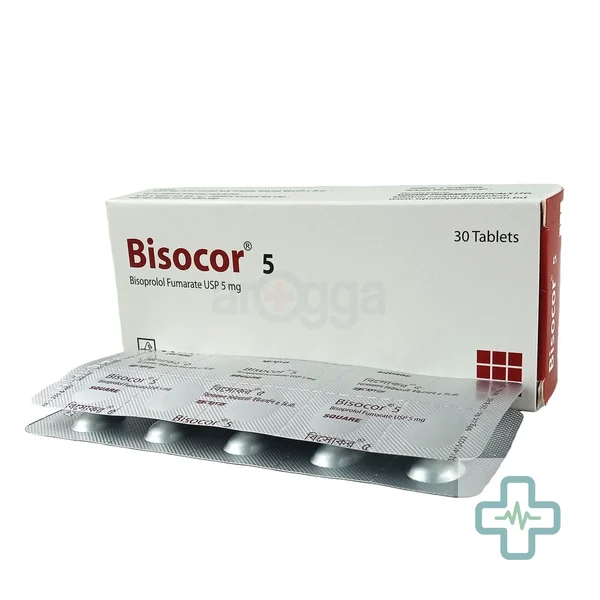
Tablet
Bisocor 5 mg Tablet
Generic: Bisoprolol Hemifumarate
Manufacturer: Square Pharmaceuticals PLC, Pabna
Therapeutic class: Cardioselective beta-blocker — antihypertensive, anti-anginal, heart failure therapy
What is Bisocor used for?
Bisocor 5 mg Tablet contains Bisoprolol Hemifumarate, a cardioselective beta-blocker from Square Pharmaceuticals PLC, Pabna.
Price in Bangladesh
| Pack | Price (BDT) |
|---|---|
| Per tablet | ৳ 11.50 |
| Strip of 10 | ৳ 115.00 |
Prices are indicative — actual retail price may vary by pharmacy.
What is Bisocor?
Bisocor 5 mg Tablet contains Bisoprolol Hemifumarate, a cardioselective beta-blocker from Square Pharmaceuticals PLC, Pabna. It is used in the management of high blood pressure, angina, and certain cases of chronic heart failure under medical supervision.
Bisocor 5 mg tablet is a medicine from Square Pharmaceuticals PLC, Pabna containing the generic Bisoprolol Hemifumarate. It is a cardioselective beta-blocker, meaning it acts mainly on the heart with less effect on the lungs than older beta-blockers. In Bangladesh it is commonly prescribed for high blood pressure, angina (chest pain on exertion), stable chronic heart failure and to control a fast heartbeat.
Bisoprolol works by blocking the effect of adrenaline-type stress hormones on the heart's beta-1 receptors. The heart then beats more slowly and less forcefully, needs less oxygen, and pumps against lower pressure. Over time this lowers blood pressure, prevents angina attacks, steadies the rhythm and — in heart failure — protects the weakened heart muscle from constant stress, helping it work more efficiently and last longer.
Indications
Bisocor is prescribed for:
- Hypertension — alone or with other blood pressure medicines.
- Chronic stable angina — preventing exertional chest pain by reducing the heart's oxygen demand.
- Stable chronic heart failure — added carefully in small, slowly increased doses alongside other heart failure medicines.
- Heart rate and rhythm control — such as in atrial fibrillation or persistent fast heartbeat, as directed by a cardiologist.
- After heart attack — in selected patients to protect the heart.
Dosage & Administration
Your doctor sets the dose of Bisocor for your condition. For blood pressure and angina the usual dose is 5 mg once daily, ranging from 2.5 mg to a maximum of 10–20 mg. In heart failure treatment starts very low (1.25 mg daily) and is increased slowly over weeks under supervision.
- Take it once daily in the morning, at the same time, with or without food; swallow with water.
- Check your pulse regularly — if it stays below about 55–60 beats per minute or you feel faint, inform your doctor before the next dose.
- If you miss a dose, skip it when the next is near; never double.
- Never stop Bisocor abruptly or on your own — sudden withdrawal can trigger rebound fast heart rate, severe angina or even heart attack. Doctors taper it gradually over 1–2 weeks when stopping is needed.
Side Effects
Common side effects of Bisocor are usually mild and often settle:
- Tiredness and reduced exercise tolerance — most noticeable in the first weeks.
- Slow pulse (bradycardia) — expected to a degree; report a pulse persistently below 55, dizziness or fainting.
- Cold hands and feet.
- Dizziness, headache.
- Sleep disturbance or vivid dreams.
- Stomach upset — nausea, constipation or diarrhoea.
- In heart failure, temporary worsening of breathlessness or swelling during dose increases — report promptly.
- Less commonly: low mood, reduced sexual ability, or masking of low-blood-sugar warning signs in diabetics.
Precautions & Warnings
Precautions with Bisocor:
- Never stop suddenly — this is the single most important rule with beta-blockers; always taper under medical guidance.
- Asthma or COPD — tell your doctor; although cardioselective, high doses can still tighten airways.
- Diabetes — the drug can mask tremor and palpitations of hypoglycaemia; monitor sugar more closely.
- Check your pulse and blood pressure regularly; keep a record.
- Tell doctors you take a beta-blocker before any surgery or anaesthesia.
- Caution in peripheral circulation problems, psoriasis and thyroid disease — beta-blockers can hide signs of overactive thyroid.
- It may cause tiredness or dizziness at first — assess your response before driving.
Drug Interactions
Important interactions of Bisocor:
- Verapamil and diltiazem — combined with a beta-blocker can dangerously slow the heart or weaken its pumping; generally avoided.
- Digoxin, amiodarone, clonidine — additive slowing of heart rate and conduction; careful monitoring needed (clonidine must also never be stopped abruptly alongside).
- Insulin and oral antidiabetics — hypoglycaemia warning signs may be masked.
- Other antihypertensives — additive pressure lowering.
- NSAID painkillers — may blunt blood-pressure control.
- Salbutamol-type inhalers — beta-blockers may slightly oppose their effect; tell your doctor if you use inhalers.
- Anaesthetic agents — inform the anaesthetist.
Contraindications
Bisocor must not be used in:
- Severe bradycardia (very slow heart rate) or sick sinus syndrome without a pacemaker.
- Second- or third-degree heart block (without pacemaker).
- Acute or decompensated heart failure requiring intravenous treatment.
- Cardiogenic shock or marked hypotension.
- Severe asthma.
- Severe peripheral arterial disease or Raynaud's phenomenon.
- Untreated phaeochromocytoma.
- Metabolic acidosis.
- Allergy to bisoprolol or any component.
Pregnancy & Lactation
Pregnancy: Beta-blockers like Bisocor are used in pregnancy only when the doctor judges the benefit outweighs the risk — they may reduce placental blood flow and are associated with slower fetal growth, and the newborn can show slow heart rate or low blood sugar if the drug is used near delivery. Pregnancy-preferred alternatives (such as labetalol) often replace it. Do not stop the tablet abruptly on learning of pregnancy; contact your doctor promptly for a supervised switch.
Breastfeeding: Small amounts may pass into breast milk; data are limited. Use only on medical advice, and watch the baby for unusual sleepiness, slow feeding or poor weight gain.
Storage Conditions
Store Bisocor below 30°C in a dry place, away from direct sunlight and moisture, keeping tablets in the original blister until use. Keep out of the reach and sight of children. Do not use beyond the expiry date printed on the pack; return expired tablets to a pharmacy for safe disposal instead of discarding them in household waste.
Frequently Asked Questions
Can I stop Bisocor when I feel better and my pressure and pulse seem normal?
No — and with a beta-blocker this rule is doubly important. Your normal pressure and steady pulse exist because Bisocor is blocking stress hormones every day. Stopping suddenly causes a rebound: the heart races, blood pressure spikes, angina can flare violently, and in people with heart disease a heart attack can be triggered within days. If the medicine ever needs to stop, your doctor will taper it gradually over one to two weeks. Never run out of tablets — refill before the strip ends, even when travelling.
Why should I check my pulse while taking Bisocor, and what pulse is too low?
Bisocor works by slowing the heart, so your pulse is the simplest daily gauge of whether the dose suits you. Check it at rest: place two fingers on the thumb side of your wrist and count for 60 seconds. A resting pulse of about 60–80 is typical on treatment; some slowing is expected and intended. If your pulse stays below about 55 beats per minute, or you feel dizzy, unusually exhausted or faint, do not take the next dose on your own judgement — contact your doctor that day. Bring your pulse record to every follow-up visit.
I have asthma and diabetes — can I take Bisocor?
Only with your doctor's full knowledge of both conditions. Bisocor is cardioselective, acting mainly on the heart, so at low doses it is often usable in mild, well-controlled airway disease — but severe asthma is a contraindication, and any new wheeze or breathlessness must be reported at once. In diabetes the medicine can hide the trembling and palpitations that warn of low blood sugar (sweating usually remains), so you should check your sugar more often and never skip meals while on a sulfonylurea or insulin. Your doctor will balance these risks against the heart benefits.
Last updated: