
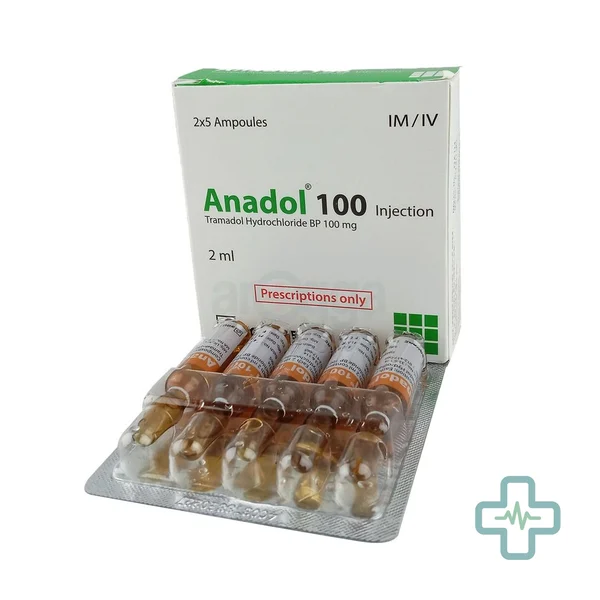
Injection
Anadol 100 mg/2 ml Injection
Generic: Tramadol Hydrochloride
Manufacturer: Square Pharmaceuticals PLC, Pabna
Therapeutic class: Centrally Acting Opioid Analgesic
What is Anadol used for?
Anadol (Injection) contains Tramadol Hydrochloride 100 mg/2 ml and is made by Square Pharmaceuticals PLC, Pabna. Therapeutic class: Centrally Acting Opioid Analgesic.
Price in Bangladesh
| Pack | Price (BDT) |
|---|---|
| Per injection | ৳ 20.14 |
| Injection | ৳ 20.14 |
Prices are indicative — actual retail price may vary by pharmacy.
What is Anadol?
Anadol 100 mg/2 ml Injection contains tramadol hydrochloride, a centrally acting opioid analgesic. It is used in medical settings to help relieve moderate to severe pain when an injectable pain medicine is considered appropriate.
Anadol 100 mg/2 ml injection is manufactured and marketed by Square Pharmaceuticals PLC, Pabna in Bangladesh. It contains Tramadol Hydrochloride, an opioid-type painkiller used for moderate to moderately severe pain. Anadol is a strictly prescription-only medicine: it can cause drowsiness, dependence and addiction when misused, and it must never be bought or taken casually for everyday aches.
Tramadol works in two ways. It attaches to opioid receptors in the brain and spinal cord, dulling how pain signals are felt, and it also increases the brain chemicals serotonin and noradrenaline, which further dampens pain pathways. This double action makes it effective for significant pain — but the same brain effects explain its risks of sedation, dependence and withdrawal symptoms.
Indications
Anadol is prescribed only when milder painkillers (such as paracetamol or NSAIDs) are insufficient or unsuitable. Doctor-approved uses include:
- Moderate to moderately severe acute pain, such as after surgery or significant injury
- Severe musculoskeletal pain (for example disc-related back pain) for short periods
- Cancer-related pain as part of a structured pain-management plan
- Other chronic painful conditions when a specialist judges an opioid-type drug is justified
It is not a medicine for headaches, routine body aches or self-treatment, and it should never be used to stay awake, improve mood or boost energy — such misuse is dangerous and habit-forming.
Dosage & Administration
ChamberBD shows dosing only from the approved product label, with its source named, and no label is on file for Anadol 100 mg/2 ml Injection. Use the dose your doctor prescribed and the instructions in the pack leaflet.
Side Effects
Side effects are common, especially when starting:
- Common: nausea, vomiting, dizziness, drowsiness, constipation, dry mouth, sweating, headache
- Less common: itching, confusion, sleep disturbance, blurred vision, difficulty passing urine
- Serious (emergency): seizures (fits), very slow or shallow breathing, extreme sleepiness or unresponsiveness, serotonin syndrome (high fever, agitation, muscle twitching, rapid heartbeat), allergic swelling of the face or throat
Long-term use can lead to tolerance (needing more for the same effect), dependence and addiction. Stopping suddenly causes withdrawal — restlessness, anxiety, sweating, body aches, insomnia and diarrhoea — which is why the dose must be tapered under medical guidance.
Precautions & Warnings
Anadol demands strict caution:
- Use it only with a valid prescription and exactly as directed — misuse of tramadol is a serious and growing problem in Bangladesh
- Do not drive, ride motorcycles or operate machinery until you know how it affects you
- Never mix it with alcohol, sleeping pills or other sedatives — the combination can dangerously suppress breathing
- Tell your doctor if you have epilepsy, head injury, breathing problems, kidney or liver disease, depression, or any history of substance misuse
- Keep it locked away from others, especially teenagers and young adults
- Do not stop suddenly after regular use — ask your doctor for a tapering plan
Drug Interactions
Dangerous interactions are possible — tell your doctor about every medicine you take:
- Antidepressants (SSRIs such as escitalopram or sertraline, SNRIs, TCAs) — risk of serotonin syndrome and seizures
- MAO inhibitors — must not be used together or within 14 days
- Sedatives: benzodiazepines, sleeping pills, antihistamines, antipsychotics, alcohol — dangerous breathing suppression
- Other opioids — additive overdose risk
- Carbamazepine — reduces tramadol's effect and may increase seizure risk
- Warfarin — bleeding tendency may rise; monitoring needed
Avoid alcohol completely while taking Anadol.
Contraindications
Anadol must not be used in the following situations:
- Children under 12 years (and not after tonsil or adenoid surgery in anyone under 18)
- Severe breathing problems, such as a severe asthma attack or respiratory depression
- Acute intoxication with alcohol, sleeping pills, opioids or other sedating drugs
- Use of MAO-inhibitor antidepressants currently or within the last 14 days
- Uncontrolled epilepsy
- Known allergy to tramadol or other opioids
- Severe kidney or liver failure, unless a specialist specifically adjusts therapy
People with a history of drug or alcohol addiction should generally avoid tramadol; safer alternatives exist.
Pregnancy & Lactation
Pregnancy: Tramadol Hydrochloride is not recommended during pregnancy. Regular use, particularly in the later months, can cause the newborn to suffer withdrawal symptoms (irritability, tremors, poor feeding, breathing problems) after birth. It should be used only if a doctor judges the benefit clearly outweighs the risk.
Breastfeeding: Tramadol passes into breast milk and can make the baby unusually sleepy or affect breathing, so it is generally not recommended while breastfeeding. If a nursing mother genuinely needs strong pain relief, the doctor will choose the safest option and monitor the baby for excessive drowsiness or poor feeding.
Storage Conditions
Store as printed on the pack and keep out of the reach of children.