
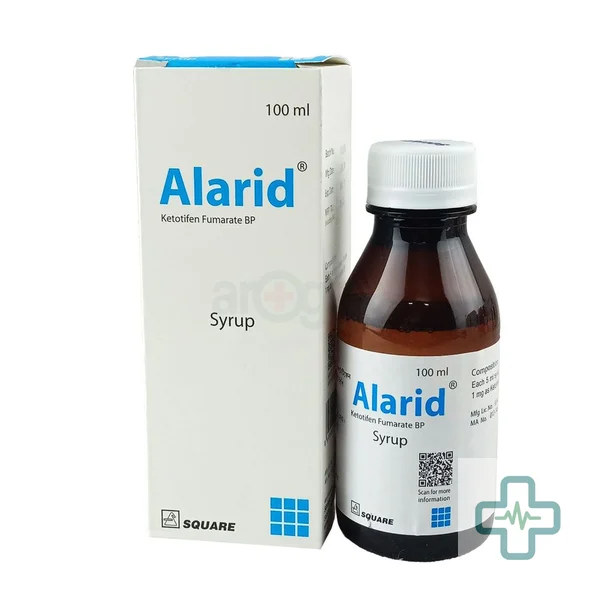
Syrup
Alarid 1 mg/5 ml Syrup
Generic: Ketotifen
Manufacturer: Square Pharmaceuticals PLC, Pabna
Therapeutic class: Antihistamine & Mast Cell Stabiliser
What is Alarid used for?
Alarid (Syrup) contains Ketotifen 1 mg/5 ml and is made by Square Pharmaceuticals PLC, Pabna. Therapeutic class: Antihistamine & Mast Cell Stabiliser.
Price in Bangladesh
| Pack | Price (BDT) |
|---|---|
| Per syrup | ৳ 75.00 |
| 100ml bot | ৳ 75.00 |
Prices are indicative — actual retail price may vary by pharmacy.
What is Alarid?
Alarid is a ketotifen 1 mg/5 ml syrup from Square Pharmaceuticals PLC, Pabna, classified as an antihistamine and mast cell stabiliser. It is used for allergic conditions and as preventive therapy in bronchial asthma, not for sudden asthma attacks.
Alarid 1 mg/5 ml syrup is an antihistamine and mast cell stabiliser from Square Pharmaceuticals PLC, Pabna containing Ketotifen. It is widely prescribed in Bangladesh — especially for children — for the long-term prevention (prophylaxis) of asthma and wheezy bronchitis, and for allergic conditions such as allergic rhinitis, conjunctivitis, and skin allergies. Alarid is a preventive medicine taken daily; it is not for stopping an asthma attack that has already started.
Ketotifen works in two ways: it blocks histamine H1 receptors, relieving allergy symptoms like sneezing, runny nose, and itching, and it stabilises mast cells so they release fewer allergy-triggering chemicals in the first place. Taken regularly for several weeks, this reduces the frequency and severity of allergic and asthmatic episodes.
Indications
- Prophylaxis (prevention) of bronchial asthma, especially in children
- Wheezy bronchitis and allergic cough
- Allergic rhinitis (sneezing, runny and itchy nose)
- Allergic conjunctivitis (itchy, watery eyes)
- Skin allergies including urticaria (hives) and itching
Dosage & Administration
ChamberBD shows dosing only from the approved product label, with its source named, and no label is on file for Alarid 1 mg/5 ml Syrup. Use the dose your doctor prescribed and the instructions in the pack leaflet.
Side Effects
Drowsiness is the most common side effect, especially in the first one to two weeks, and usually lessens as the body adjusts. Other effects include dry mouth, dizziness, and — particularly in children — increased appetite with weight gain over months of use. Some children instead become irritable or excitable. Less common effects include sleep disturbance and stomach upset. Tell your doctor if drowsiness affects school performance or daily activities, or if any unusual behaviour change appears.
Precautions & Warnings
Expect drowsiness early in treatment: avoid driving, operating machinery, or other tasks needing alertness until you know how Ketotifen affects you, and watch how children respond before school activities. Avoid alcohol and other sedating medicines, which add to the sleepiness. Ketotifen may rarely lower the seizure threshold, so use cautiously in epilepsy. Diabetic patients should note that some syrup formulations contain sugar. Keep using your reliever inhaler and other asthma medicines as prescribed — ketotifen does not replace them.
Drug Interactions
Ketotifen increases the sedative effect of alcohol, sleeping pills, anxiolytics, opioid pain medicines, and other sedating antihistamines — avoid these combinations. A specific caution: taken with oral antidiabetic medicines, ketotifen has rarely been associated with a fall in platelet counts, so doctors may monitor blood counts in diabetic patients. It may also mask positive skin allergy test results; stop it some days before allergy testing as advised. Inform your doctor of all medicines being taken, especially for children.
Contraindications
Ketotifen must not be used by anyone with known hypersensitivity to it. It is not recommended during breastfeeding, and syrup use in infants below the age stated by the manufacturer (commonly under 6 months to 1 year depending on product) should only follow a doctor's decision. Patients with a history of epilepsy should generally avoid it unless the doctor judges otherwise.
Pregnancy & Lactation
Pregnancy: Safety in pregnancy is not fully established. Ketotifen should be used only if the doctor considers it clearly necessary, and many doctors prefer alternatives with longer safety records. Lactation: Ketotifen passes into breast milk and may sedate the baby, so it is generally avoided while breastfeeding. Discuss allergy and asthma management with your doctor if you are pregnant or nursing.
Storage Conditions
Store below 30°C in a dry place, protected from light. Keep syrup bottles tightly closed and use within the time stated on the label after opening. Keep all forms out of the reach of children — the syrup tastes sweet and can attract them — and never use after the expiry date.