
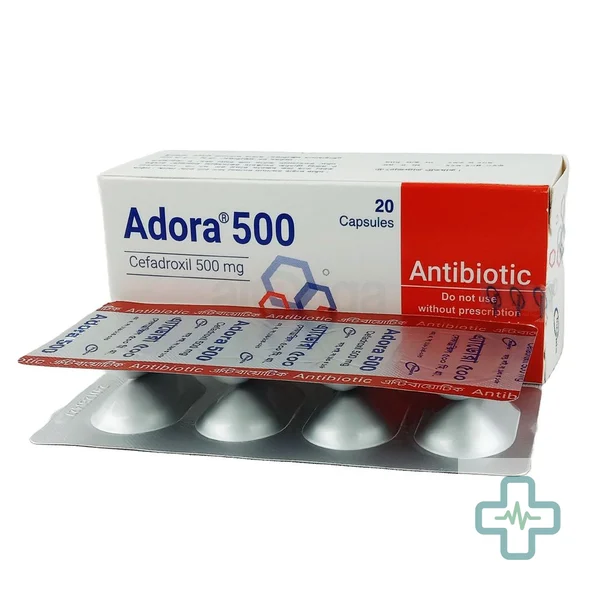
Capsule
Adora 500 mg Capsule
Generic: Cefadroxil
Manufacturer: Incepta Pharmaceuticals Ltd.
Therapeutic class: First-Generation Cephalosporin Antibiotic
What is Adora used for?
Adora (Capsule) contains Cefadroxil 500 mg and is made by Incepta Pharmaceuticals Ltd. Therapeutic class: First-Generation Cephalosporin Antibiotic.
Price in Bangladesh
| Pack | Price (BDT) |
|---|---|
| Per capsule | ৳ 18.00 |
| Strip of 4 | ৳ 72.00 |
Prices are indicative — actual retail price may vary by pharmacy.
What is Adora?
Adora 500 mg Capsule contains cefadroxil, a first-generation cephalosporin antibiotic from Incepta Pharmaceuticals Ltd. It is used for infections caused by susceptible bacteria, including some throat, skin and soft-tissue, and urinary tract infections.
Adora 500 mg capsule is a first-generation cephalosporin antibiotic from Incepta Pharmaceuticals Ltd. containing the generic Cefadroxil. Doctors in Bangladesh commonly prescribe it for throat infections, skin and soft-tissue infections such as boils and cellulitis, and urinary tract infections. Its long duration of action allows convenient once- or twice-daily dosing, which makes completing a full course easier. Adora is a prescription-only medicine.
Cefadroxil kills bacteria by blocking the enzymes they use to build their protective cell wall. As the weakened wall develops gaps, the bacterial cell bursts and dies. Because this wall exists only in bacteria, the medicine does not harm human cells — and it has no effect on viral illnesses like colds or flu.
Indications
Adora is used for infections caused by cefadroxil-sensitive bacteria, including:
- Throat infections: streptococcal pharyngitis and tonsillitis
- Skin and soft-tissue infections: boils, abscesses, impetigo, infected wounds and cellulitis
- Urinary tract infections such as cystitis, and some kidney infections caused by susceptible organisms
It is sometimes chosen when a patient cannot take a penicillin-class drug but has no history of severe penicillin allergy. Your doctor will confirm whether Adora suits your infection, sometimes after a urine or swab culture. Never take it for viral fever, the common cold or dengue, where antibiotics give no benefit and only fuel resistance.
Dosage & Administration
ChamberBD shows dosing only from the approved product label, with its source named, and no label is on file for Adora 500 mg Capsule. Use the dose your doctor prescribed and the instructions in the pack leaflet.
Side Effects
Adora is generally well tolerated. Possible side effects include:
- Diarrhoea, nausea, vomiting or stomach discomfort — the most common complaints
- Skin rash, itching or hives
- Oral or vaginal thrush (candida) after longer courses
- Occasional headache or dizziness
Seek medical help urgently if you develop swelling of the face, lips or throat, difficulty breathing, severe blistering rash, persistent watery or bloody diarrhoea, unusual bleeding, or yellowing of the skin and eyes. These reactions are rare but need immediate attention. Mild diarrhoea often settles on its own — drink enough fluids and avoid anti-diarrhoeal medicines unless your doctor advises them.
Precautions & Warnings
Adora is a prescription-only antibiotic. Bangladesh is in the middle of an antibiotic-resistance crisis, fuelled by over-the-counter antibiotic sales and unfinished courses. Take Adora only on a doctor's advice and always complete the full course, even if the fever or pain settles within a few days — stopping early breeds resistant bacteria that are far harder to treat later.
- Tell your doctor if you have ever reacted to penicillin or any cephalosporin; a small number of penicillin-allergic patients also react to cefadroxil
- Mention any kidney disease — dose adjustment may be needed
- Report severe or persistent diarrhoea during or after treatment, and any past history of bowel inflammation (colitis)
Drug Interactions
Cefadroxil has relatively few drug interactions, but tell your doctor and pharmacist about all medicines you take. Notable ones include:
- Probenecid (used for gout): slows the kidney's removal of cefadroxil and raises its blood level
- Other kidney-stressing medicines such as aminoglycoside antibiotics or strong diuretics — combined use needs monitoring
- Warfarin and other blood thinners: antibiotics can occasionally alter their effect, so INR may need checking
- Live oral typhoid vaccine: antibiotics can make the vaccine ineffective; keep a gap as advised
Cefadroxil may also cause a false-positive result in certain urine sugar tests used by people with diabetes — mention it before testing.
Contraindications
Do not take Adora if you:
- Are allergic to cefadroxil, cephalexin or any other cephalosporin antibiotic
- Have previously had a severe, immediate reaction to penicillin — such as anaphylaxis, throat swelling or widespread hives — because of the risk of cross-reaction
- Have had a severe skin reaction (such as Stevens–Johnson syndrome) linked to a beta-lactam antibiotic
Use with extra caution, and only under medical supervision, if you have significant kidney impairment or a history of antibiotic-associated colitis. Always tell your doctor about every previous medicine reaction, even one that happened many years ago or seemed minor at the time.
Pregnancy & Lactation
Pregnancy: Cefadroxil belongs to the cephalosporin family, which has a long record of safe use in pregnancy, and animal studies have shown no harm to the foetus. It is often considered a suitable antibiotic for pregnant women when treatment is genuinely needed — but it should still be taken only when prescribed by a doctor who knows you are pregnant.
Breastfeeding: Small amounts of Cefadroxil pass into breast milk. Breastfeeding can usually continue during a short course, but watch the baby for loose stools, rash or oral thrush and inform your doctor if these appear. Confirm with your doctor before starting Adora while nursing.
Storage Conditions
Store as printed on the pack and keep out of the reach of children.
Frequently Asked Questions
My fever is gone after three days — can I stop Adora?
No. Symptoms improve once the weakest bacteria die, but tougher ones are still present in your body. If you stop Adora early they regrow, the infection can return, and the surviving bacteria may become resistant — a growing emergency in Bangladesh where many antibiotics no longer work. Complete every day of the prescribed course, usually 7–10 days for most infections and a full 10 days for throat infections, even if you feel completely well.
I am allergic to penicillin — is Adora safe for me?
It depends on the type of reaction you had. Cefadroxil is a cephalosporin, a close cousin of penicillin, and a small percentage of penicillin-allergic people react to it too. If your previous reaction was severe or immediate — breathing difficulty, facial swelling, collapse or widespread hives — you should not take Adora. If it was only a mild, delayed rash, your doctor may still prescribe it with caution. Always describe your allergy history in detail before starting.