
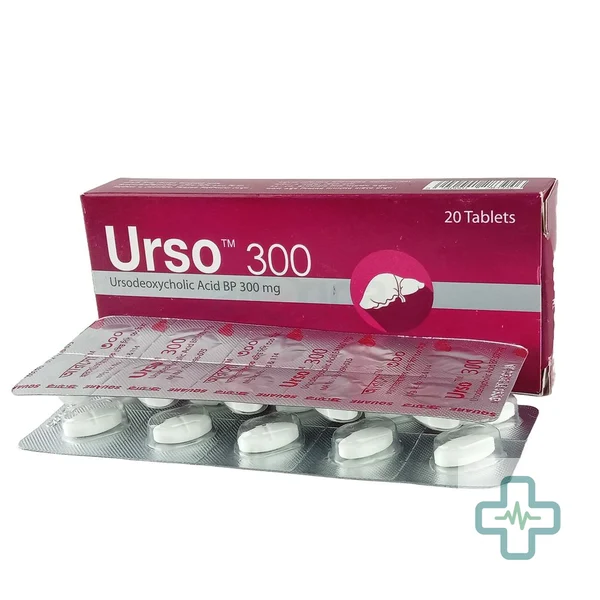
Tablet
Urso 300 mg Tablet
Generic: Ursodeoxycholic Acid
Manufacturer: Square Pharmaceuticals PLC, Pabna
Therapeutic class: Bile acid — gallstone dissolution and cholestatic liver disease therapy
What is Urso 300 used for?
Urso 300 (Tablet) contains Ursodeoxycholic Acid 300 mg and is made by Square Pharmaceuticals PLC, Pabna. Therapeutic class: Bile acid — gallstone dissolution and cholestatic liver disease therapy.
Price in Bangladesh
| Pack | Price (BDT) |
|---|---|
| Per tablet | ৳ 25.00 |
| Strip of 10 | ৳ 250.00 |
Prices are indicative — actual retail price may vary by pharmacy.
What is Urso 300?
Urso 300 is a tablet containing 300 mg ursodeoxycholic acid, a bile acid medicine made by Square Pharmaceuticals PLC, Pabna. It is used for selected cholesterol gallstones and for cholestatic liver conditions such as primary biliary cholangitis when prescribed by a doctor.
Urso 300 300 mg tablet is manufactured by Square Pharmaceuticals PLC, Pabna and contains Ursodeoxycholic Acid (UDCA), a naturally occurring bile acid. It is used to dissolve certain cholesterol gallstones without surgery and to treat long-term liver conditions in which bile flow is reduced, such as primary biliary cholangitis.
Ursodeoxycholic Acid works in two main ways. In the gallbladder, it lowers the amount of cholesterol the liver releases into bile, so bile becomes less saturated and small cholesterol stones slowly dissolve over months. In liver disease, it replaces harsher natural bile acids with a gentler one, improves bile flow and protects liver cells from bile-related damage — which is why liver test results often improve during treatment.
Indications
Doctors prescribe Urso 300 for:
- Dissolving gallstones — small, non-calcified (radiolucent) cholesterol stones in a gallbladder that still works, in patients who cannot or prefer not to have surgery
- Primary biliary cholangitis (PBC) — the standard long-term treatment to slow disease progression
- Other cholestatic conditions under specialist care, such as intrahepatic cholestasis of pregnancy or biliary sludge
It does not work on calcified or pigment stones, and it is not a treatment for an acutely inflamed gallbladder, which usually needs urgent surgical care. Ultrasound and liver tests guide whether Urso 300 is the right choice for you.
Dosage & Administration
ChamberBD shows dosing only from the approved product label, with its source named, and no label is on file for Urso 300 mg Tablet. Use the dose your doctor prescribed and the instructions in the pack leaflet.
Side Effects
Urso 300 is usually well tolerated. Possible side effects include:
- Pasty or loose stools and diarrhoea — the most common effect; often settles after the dose is adjusted
- Nausea, mild stomach discomfort or wind
- Itching or skin rash
- Rarely, gallstones can develop a calcified shell during treatment, which stops them dissolving
- In advanced liver cirrhosis, worsening of the condition has rarely been reported — such patients need specialist monitoring
Seek medical attention promptly if you develop severe right-upper abdominal pain, fever with chills, vomiting or yellowing of the eyes or skin during treatment — these suggest a blocked duct or gallbladder inflammation rather than a side effect.
Precautions & Warnings
For safe and effective treatment with Urso 300:
- Complete the full course — stones that have only partly dissolved regrow quickly if treatment stops early.
- Attend the scheduled ultrasound scans and liver function tests; they show whether the stones are shrinking and the liver is responding.
- Remember that stones can recur after successful treatment — keeping a healthy weight, avoiding rapid crash dieting and eating a balanced, lower-fat diet reduce that risk.
- Tell your doctor about cirrhosis, peptic ulcer or any change in symptoms such as repeated biliary pain.
- Keep your doctor informed of all other medicines, since several reduce the absorption or effect of UDCA.
Drug Interactions
Some medicines stop Urso 300 from working properly:
- Cholestyramine, colestipol and antacids containing aluminium bind UDCA in the gut. Keep a gap of at least 2 hours (longer for cholestyramine, ideally 4 hours) between them and Urso 300.
- Oestrogens (including some birth control pills) and lipid-lowering medicines such as clofibrate increase cholesterol in bile and can work against stone dissolution.
- Ursodeoxycholic Acid can increase ciclosporin absorption — transplant patients need level monitoring — and may reduce absorption of ciprofloxacin.
- It may enhance the glucose-lowering effect of some diabetes medicines; monitor as advised.
Share your full medicine list, including antacids and herbal products, with your doctor and pharmacist.
Contraindications
Do not take Urso 300 if you have:
- Allergy to Ursodeoxycholic Acid, other bile acids or any ingredient of the product
- Acute inflammation of the gallbladder or bile ducts (cholecystitis, cholangitis)
- Blockage of the common bile duct or cystic duct
- Frequent episodes of severe biliary colic
- Calcified gallstones or a gallbladder that no longer functions or cannot be seen on imaging
- Severe liver or pancreatic disease, unless a specialist decides otherwise
In these situations the medicine either cannot work or may delay surgery that is genuinely needed — your doctor will confirm suitability with an ultrasound first.
Pregnancy & Lactation
For gallstone treatment, Urso 300 is generally avoided during pregnancy, and women of child-bearing age are usually advised to use effective non-hormonal contraception during long courses, since hormonal pills can also work against stone dissolution. However, specialists do use UDCA during pregnancy for intrahepatic cholestasis of pregnancy — a liver condition causing severe itching — where experience suggests it is reasonably safe under supervision.
Only tiny amounts pass into breast milk, and no harm to breastfed babies has been reported at usual doses; even so, breastfeeding while on Urso 300 should be discussed with and approved by your doctor.
Storage Conditions
Store Urso 300 below 30°C in a cool, dry place, protected from direct sunlight and moisture. Keep the tablet in its original blister or container until use, and avoid humid places such as the bathroom or kitchen — remember that gallstone courses last many months, so proper storage of the whole supply matters.
- Keep all medicines out of the reach and sight of children.
- Do not use the medicine after the expiry date printed on the pack.
- Do not throw unused medicine into household waste or drains; ask your pharmacist about safe disposal.
Frequently Asked Questions
Can Urso 300 dissolve every type of gallstone?
No. Urso 300 dissolves only cholesterol stones that are small (ideally under about 15 mm), non-calcified and sitting in a gallbladder that still functions. Pigment stones and stones with a calcium shell do not respond, and a blocked or non-working gallbladder prevents the medicine from reaching the stones at all. That is why an ultrasound — and sometimes other imaging — is done before starting, and repeated during treatment. If your stones are unsuitable, repeatedly painful or complicated by infection or jaundice, surgery (usually laparoscopic gallbladder removal) is the more reliable option, and your doctor will guide that decision.