
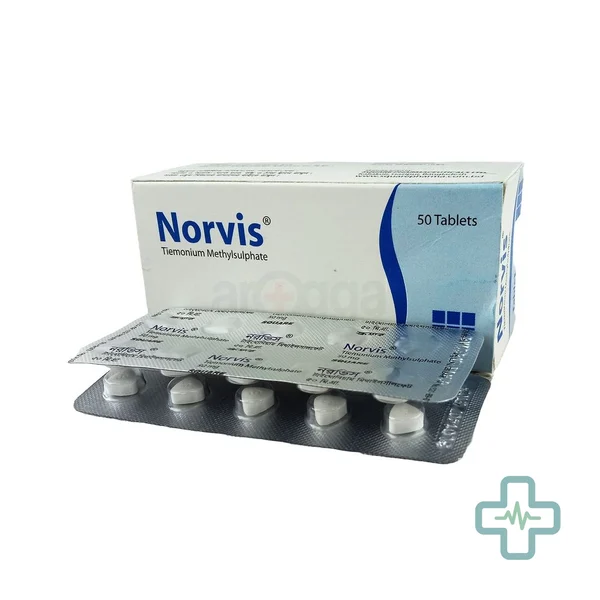
Tablet
Norvis 50 mg Tablet
Generic: Tiemonium Methylsulphate
Manufacturer: Square Pharmaceuticals PLC, Pabna
Therapeutic class: Antispasmodic (antimuscarinic)
What is Norvis used for?
Norvis (Tablet) contains Tiemonium Methylsulphate 50 mg and is made by Square Pharmaceuticals PLC, Pabna. Therapeutic class: Antispasmodic (antimuscarinic).
Price in Bangladesh
| Pack | Price (BDT) |
|---|---|
| Per tablet | ৳ 8.50 |
| Strip of 10 | ৳ 85.00 |
Prices are indicative — actual retail price may vary by pharmacy.
What is Norvis?
Norvis 50 mg Tablet contains tiemonium methylsulphate, an antimuscarinic antispasmodic made by Square Pharmaceuticals PLC, Pabna. It is used to relieve painful spasms of smooth muscles, such as those in the digestive, biliary, urinary, or uterine tract.
Norvis 50 mg tablet is a Tiemonium Methylsulphate preparation manufactured by Square Pharmaceuticals PLC, Pabna. It is an antispasmodic medicine used to relieve cramping pain arising from the digestive tract, biliary system, urinary tract and uterus. Doctors in Bangladesh commonly prescribe Norvis for colicky abdominal pain, painful spasms in irritable bowel syndrome, biliary and renal colic, and period-related cramps.
Tiemonium Methylsulphate is an antimuscarinic agent. It blocks muscarinic acetylcholine receptors on the smooth muscle of internal organs, reducing excessive, painful contractions and allowing the muscle to relax. Because it is a quaternary ammonium compound, very little crosses into the brain, so it relieves visceral spasm with minimal central side effects such as drowsiness.
Indications
- Spasmodic (colicky) abdominal pain of gastrointestinal origin
- Painful spasm in irritable bowel syndrome and spastic colon
- Biliary colic (gallbladder-related cramping pain), as part of doctor-directed care
- Renal and ureteric colic with urinary tract spasm
- Dysmenorrhoea (painful menstrual cramps) and other gynaecological spasm
- Spasm-related pain in gastroenteritis or dysentery, alongside treatment of the cause
Dosage & Administration
ChamberBD shows dosing only from the approved product label, with its source named, and no label is on file for Norvis 50 mg Tablet. Use the dose your doctor prescribed and the instructions in the pack leaflet.
Side Effects
Side effects of tiemonium are mostly mild anticholinergic effects: dry mouth, blurred vision, constipation, nausea and reduced sweating. Some people notice a faster heartbeat, mild dizziness or difficulty passing urine, particularly older men with prostate enlargement.
These effects are dose-related and usually settle when the medicine is stopped. Rarely, allergic reactions with rash, itching or swelling occur. Because reduced sweating can cause overheating, take care in hot weather. Seek medical help promptly for inability to pass urine, severe constipation with abdominal distension, eye pain with halos around lights, palpitations or any sign of a severe allergic reaction.
Precautions & Warnings
Use tiemonium with caution and tell your doctor first if you have prostate enlargement or difficulty urinating, a history of glaucoma, heart disease or fast heart rhythms, thyroid overactivity, fever, severe constipation or reflux disease. The elderly are more sensitive to anticholinergic effects and need careful dosing.
An antispasmodic relieves pain but does not treat the cause. Sudden severe abdominal pain with fever, vomiting, a rigid abdomen, blood in stool or urine, or pain lasting more than a day must be properly evaluated before or alongside symptomatic relief. Avoid driving if your vision blurs, and limit exertion in hot environments while taking it.
Drug Interactions
Tiemonium's anticholinergic actions add up with other medicines having similar effects — atropine-like drugs, tricyclic antidepressants such as amitriptyline, older antihistamines, some antipsychotics and medicines for Parkinson's disease or urinary urgency. Combined use increases dry mouth, constipation, urinary difficulty and confusion risk, especially in the elderly.
By slowing gut movement it may alter the absorption of some other oral medicines. Combining it with amantadine or disopyramide also heightens anticholinergic load. Alcohol may worsen dizziness. Tell your doctor and pharmacist about all medicines, supplements and herbal remedies you take so combinations can be checked.
Contraindications
Tiemonium methylsulphate is contraindicated in people with known hypersensitivity to it, in narrow-angle (angle-closure) glaucoma or a predisposition to it, in urinary retention or significant prostate-related outflow obstruction, and in conditions where slowing the gut is dangerous, such as paralytic ileus, intestinal obstruction, toxic megacolon or severe ulcerative colitis.
It should also be avoided in myasthenia gravis and in significant obstructive uropathy. People with severe heart disease or tachyarrhythmias need specialist judgement before use. If you have ever reacted badly to an antispasmodic or atropine-like medicine, tell your doctor before taking it.
Pregnancy & Lactation
Pregnancy: There are no adequate controlled studies of tiemonium in pregnant women. It should be used in pregnancy only when a doctor considers it clearly necessary, at the lowest effective dose for the shortest time, after weighing benefit against possible risk.
Lactation: It is not well established how much tiemonium passes into breast milk. As a precaution, breastfeeding mothers should take it only on medical advice. Anticholinergic medicines can occasionally reduce milk supply, so watch for this and for any unusual irritability, constipation or feeding difficulty in the baby, and inform your doctor.
Storage Conditions
Store below 30°C in a cool, dry place away from direct sunlight and moisture. Keep the tablet in its original packaging until use. Keep out of the reach and sight of children. Do not use after the expiry date printed on the pack, and dispose of unused medicine safely, preferably through a pharmacy rather than household waste.