
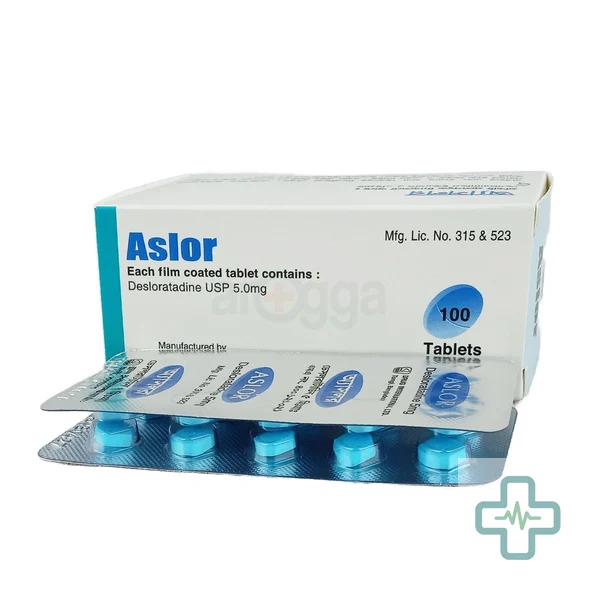
Tablet
Aslor 5 mg Tablet
Generic: Desloratadine
Manufacturer: Drug International Ltd.
Therapeutic class: Non-sedating (second-generation) antihistamine
What is Aslor used for?
Aslor (Tablet) contains Desloratadine 5 mg and is made by Drug International Ltd. Therapeutic class: Non-sedating (second-generation) antihistamine.
Price in Bangladesh
| Pack | Price (BDT) |
|---|---|
| Per tablet | ৳ 2.55 |
| Strip of 10 | ৳ 25.50 |
Prices are indicative — actual retail price may vary by pharmacy.
What is Aslor?
Aslor 5 mg Tablet contains desloratadine, a second-generation antihistamine made by Drug International Ltd. It is used to relieve allergy symptoms such as sneezing, runny or itchy nose, itchy eyes, and hives related to allergic rhinitis or urticaria.
Aslor 5 mg tablet is a medicine from Drug International Ltd. that contains Desloratadine, a modern non-sedating antihistamine. It is widely used in Bangladesh to relieve sneezing, runny nose, itchy or watery eyes caused by allergic rhinitis, as well as itching and hives (urticaria) on the skin. Because it causes little or no drowsiness at usual doses, most people can take it during the day and continue their normal work.
Desloratadine works by blocking histamine, a natural chemical the body releases during an allergic reaction. Histamine is what triggers sneezing, itching, swelling and watery discharge. By keeping histamine from attaching to its receptors, Aslor calms these symptoms without heavily entering the brain, which is why it is called a non-sedating antihistamine.
Indications
Aslor is commonly prescribed for:
- Allergic rhinitis — seasonal or year-round allergy with sneezing, runny or blocked nose, itchy nose, and itchy, red or watery eyes
- Chronic idiopathic urticaria — long-lasting hives with itching and raised skin rash
- Itching associated with other allergic skin conditions, as advised by a doctor
- Allergy symptoms triggered by dust, pollen, animal dander or other common allergens
Your doctor may also use it for other allergy-related problems where an antihistamine is helpful.
Dosage & Administration
ChamberBD shows dosing only from the approved product label, with its source named, and no label is on file for Aslor 5 mg Tablet. Use the dose your doctor prescribed and the instructions in the pack leaflet.
Side Effects
Aslor is generally well tolerated. Possible side effects include:
- Headache, tiredness or fatigue
- Dry mouth
- Mild drowsiness in some people (much less than older antihistamines)
- Dizziness, sore throat or nausea (uncommon)
- Rarely: fast heartbeat, palpitations, or allergic reactions such as rash, swelling of face/lips, or breathing difficulty
If you notice severe rash, swelling, breathing trouble or an irregular heartbeat after taking Aslor, stop the medicine and seek medical help immediately.
Precautions & Warnings
- Tell your doctor if you have kidney or liver problems — the dose may need adjustment.
- Although Aslor is non-sedating for most people, see how it affects you before driving or operating machinery.
- Avoid alcohol while on antihistamines, as it may add to any drowsiness.
- Inform your doctor if you have a history of seizures (fits), as antihistamines should be used cautiously.
- Do not use it to treat a severe allergic reaction (anaphylaxis) — that needs emergency treatment.
- Tell your doctor about all other medicines, supplements and herbal products you take.
Drug Interactions
Desloratadine has fewer drug interactions than older antihistamines, but caution is still needed:
- Alcohol and sedatives (sleeping pills, anxiety medicines) — may increase drowsiness when combined.
- Erythromycin, azithromycin and ketoconazole — these can raise the blood level of Desloratadine; usually not harmful but tell your doctor.
- Other antihistamines or cough-cold combinations — avoid doubling up, since many cold remedies already contain an antihistamine.
Always share your full medicine list with your doctor or pharmacist before starting Aslor.
Contraindications
- Known allergy (hypersensitivity) to Desloratadine, loratadine, or any ingredient of the preparation
- Children below the age range recommended for the specific preparation, unless the doctor advises otherwise
- Use with caution — and only on medical advice — in severe kidney disease
Pregnancy & Lactation
There is limited human data on Desloratadine in pregnancy. It should be used during pregnancy only if the doctor judges that the benefit outweighs any possible risk — do not start it on your own. Desloratadine passes into breast milk in small amounts, so breastfeeding mothers should consult a doctor before use; the doctor may choose this medicine or a better-studied alternative depending on the situation.
Storage Conditions
Store Aslor below 30°C in a cool, dry place, protected from light and moisture. Keep the medicine in its original pack and out of the reach of children. Do not use after the expiry date printed on the pack.