
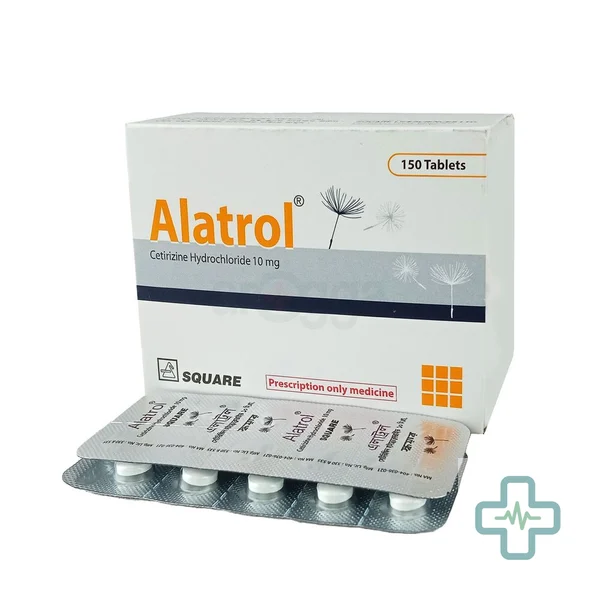
Tablet
Alatrol 10 mg Tablet
Generic: Cetirizine Dihydrochloride
Manufacturer: Square Pharmaceuticals PLC, Gazipur
Therapeutic class: Second-generation antihistamine
What is Alatrol used for?
Alatrol (Tablet) contains Cetirizine Dihydrochloride 10 mg and is made by Square Pharmaceuticals PLC, Gazipur. Therapeutic class: Second-generation antihistamine.
Price in Bangladesh
| Pack | Price (BDT) |
|---|---|
| Per tablet | ৳ 3.00 |
| Strip of 10 | ৳ 30.00 |
Prices are indicative — actual retail price may vary by pharmacy.
What is Alatrol?
Alatrol 10 mg Tablet contains cetirizine dihydrochloride, a second-generation antihistamine made by Square Pharmaceuticals PLC. It is used to relieve allergy symptoms such as sneezing, runny nose, itchy or watery eyes, and hives-related itching.
Alatrol 10 mg tablet is manufactured and marketed by Square Pharmaceuticals PLC, Gazipur in Bangladesh. It contains Cetirizine Dihydrochloride, one of the most commonly used antihistamines in the country for sneezing, runny nose, itchy eyes and skin allergies such as hives. As a second-generation antihistamine it causes far less drowsiness than older medicines, though mild sleepiness is still possible in some people, so many prefer taking it at night.
Cetirizine works by blocking histamine H1 receptors. During an allergic reaction, the body releases histamine, the chemical that produces sneezing, itching, watery discharge and raised, itchy skin wheals. By preventing histamine from binding to its receptors, cetirizine calms these symptoms — usually starting within 20 to 60 minutes and lasting about 24 hours per dose.
Indications
Alatrol is used for:
- Allergic rhinitis — seasonal and perennial: sneezing, runny or blocked itchy nose
- Allergic conjunctivitis — itchy, watery, red eyes
- Urticaria (hives) — acute and chronic itchy wheals
- Itching from insect bites, prickly heat and other allergic skin irritation, as a doctor advises
- Allergy symptoms during dust and pollen seasons, and house-dust-mite allergy
- Often combined with other treatments for cold-related runny nose when allergy plays a part
It relieves symptoms; recurring allergy needs trigger identification and a doctor's care.
Dosage & Administration
ChamberBD shows dosing only from the approved product label, with its source named, and no label is on file for Alatrol 10 mg Tablet. Use the dose your doctor prescribed and the instructions in the pack leaflet.
Side Effects
Alatrol is well tolerated by most people. Possible side effects:
- Mild drowsiness or tiredness — the most noticeable one; affects roughly one in ten users
- Headache or dizziness
- Dry mouth
- Nausea or mild stomach discomfort
- Restlessness or irritability in some children
Rare effects include palpitations, difficulty passing urine, allergic rash and — after long continuous use — intense itching for a while if the medicine is stopped suddenly. Serious reactions are very rare; seek urgent help for facial swelling or breathing difficulty.
Precautions & Warnings
Precautions with Alatrol:
- See how it affects you before driving or operating machinery — mild drowsiness is possible, especially with the first few doses
- Avoid alcohol — it increases any sleepiness
- Tell your doctor if you have kidney or liver disease — the dose usually needs lowering
- Use with caution in epilepsy and in elderly patients prone to confusion
- Caution if you have urinary retention or prostate problems
- After months of continuous daily use, do not stop suddenly — tapering reduces rebound itching
- Stop it 3 days before allergy skin tests, as it can mask the results
Drug Interactions
Alatrol has few significant drug interactions, but keep these in mind:
- Alcohol — increases drowsiness and impairs alertness; avoid while on this medicine
- Sedatives and sleeping pills (benzodiazepines, zolpidem) — additive sleepiness
- Other sedating antihistamines (chlorpheniramine, promethazine) — do not double up; excess sedation without extra benefit
- Theophylline — may slightly reduce cetirizine clearance
- Ritonavir — can raise cetirizine levels
Unlike fexofenadine, cetirizine is not significantly affected by fruit juice or antacids. Still, tell your doctor everything you take, including cough syrups that may already contain an antihistamine.
Contraindications
Do not take Alatrol if you have:
- Known allergy to cetirizine, levocetirizine, hydroxyzine or any ingredient of the product
- End-stage kidney disease (severe renal failure on dialysis) — unless a specialist specifically advises
Use only with a doctor's guidance in significant kidney or liver impairment, epilepsy, pregnancy and in children under 2 years. Galactose-intolerant patients should note that tablets may contain lactose.
Pregnancy & Lactation
Pregnancy: Available data on cetirizine in pregnancy are reassuring, and doctors often consider it one of the acceptable antihistamines when treatment is clearly needed. Even so, take it in pregnancy only on your doctor's advice, at the lowest effective dose.
Breastfeeding: Cetirizine passes into breast milk in small amounts and may occasionally make the baby drowsy or irritable, or slightly reduce milk supply with prolonged high doses. Occasional low doses are generally regarded as compatible with breastfeeding — confirm with your doctor and watch the baby for unusual sleepiness.
Storage Conditions
Store as printed on the pack and keep out of the reach of children.