
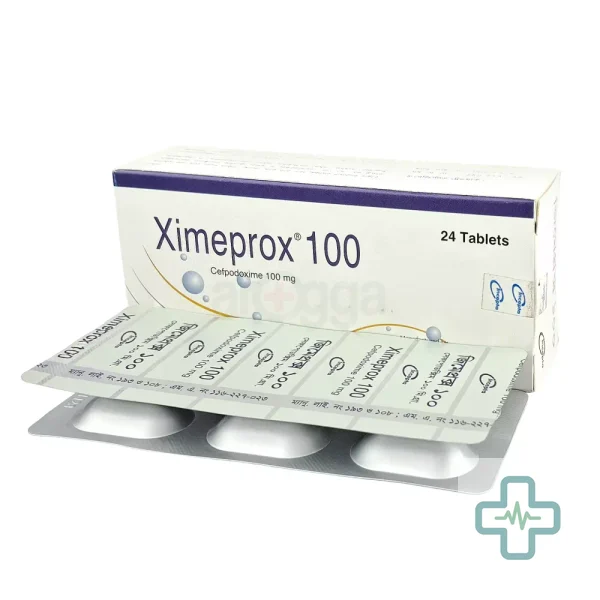
Tablet
Ximeprox 100 mg Tablet
Generic: Cefpodoxime (Cefpodoxime Proxetil)
Manufacturer: Incepta Pharmaceuticals Ltd.
Therapeutic class: Third-generation oral cephalosporin antibiotic
What is Ximeprox used for?
Ximeprox (Tablet) contains Cefpodoxime (Cefpodoxime Proxetil) 100 mg and is made by Incepta Pharmaceuticals Ltd. Therapeutic class: Third-generation oral cephalosporin antibiotic.
Price in Bangladesh
| Pack | Price (BDT) |
|---|---|
| Per tablet | ৳ 15.00 |
| Strip of 6 | ৳ 90.00 |
Prices are indicative — actual retail price may vary by pharmacy.
What is Ximeprox?
Ximeprox 100 mg Tablet contains cefpodoxime proxetil, a third-generation oral cephalosporin antibiotic from Incepta Pharmaceuticals Ltd. It is used to treat susceptible bacterial infections, commonly involving the respiratory tract, urinary tract, skin and soft tissue, or ear, nose, and throat.
Ximeprox 100 mg tablet from Incepta Pharmaceuticals Ltd. contains cefpodoxime, a third-generation oral cephalosporin antibiotic. It is prescribed for a wide range of infections of the chest, throat, ear, urinary tract and skin, and is active against many bacteria that older antibiotics may not cover.
Cefpodoxime works by blocking the bacteria from building their protective cell wall. As the wall weakens and breaks down, the bacteria can no longer survive. Because it resists some bacterial defence enzymes, this third-generation cephalosporin can treat certain stubborn infections, but it should always be used exactly as the doctor directs.
Indications
Cefpodoxime (Cefpodoxime Proxetil) is prescribed by doctors for infections caused by sensitive bacteria, including:
- Respiratory infections — acute bronchitis, pneumonia and flare-ups of long-term chest disease
- Throat and tonsil infections
- Ear and sinus infections
- Urinary tract infections
- Skin and soft-tissue infections and some gonococcal infections
The doctor selects cefpodoxime based on the likely bacteria and your individual situation; it is not suitable for viral illnesses such as the common cold.
Dosage & Administration
ChamberBD shows dosing only from the approved product label, with its source named, and no label is on file for Ximeprox 100 mg Tablet. Use the dose your doctor prescribed and the instructions in the pack leaflet.
Side Effects
Cefpodoxime is generally well tolerated, but possible side effects include:
- Common: diarrhoea, nausea, stomach pain and headache
- Less common: skin rash, itching, vaginal thrush and dizziness
- Serious (seek urgent help): severe or bloody diarrhoea, signs of a serious allergic reaction (facial swelling, breathing difficulty), or yellowing of the eyes or skin
Most effects are mild and settle as the course finishes. Report severe, watery or persistent diarrhoea to your doctor without delay.
Precautions & Warnings
Cefpodoxime (Cefpodoxime Proxetil) is a prescription-only antibiotic. Take it only when a registered doctor prescribes it — never self-medicate, share it, or use leftover tablets for a new illness.
- Finish the whole course even if you feel better quickly, so the infection is fully cleared.
- Antibiotic resistance is a serious and growing crisis in Bangladesh. Misusing newer antibiotics like cefpodoxime is especially harmful, as these are needed for harder infections.
- Tell your doctor about any penicillin or cephalosporin allergy.
- Mention kidney problems or a history of severe bowel upset, and take each dose with food.
Drug Interactions
Tell your doctor about all your medicines and supplements. Cefpodoxime can interact with:
- Antacids and acid-reducing medicines (such as omeprazole or ranitidine) — these lower its absorption, so separate the doses
- Probenecid — raises cefpodoxime levels
- Warfarin — bleeding risk may increase
- Other medicines that can affect the kidneys
Because antacids reduce its effect, take Ximeprox with food and keep a gap of a few hours from any antacid.
Contraindications
Do not take Cefpodoxime (Cefpodoxime Proxetil) if you:
- Have a known allergy to cephalosporin antibiotics
- Have had a severe allergic reaction to penicillin — discuss with your doctor first
Use under close medical supervision if you have significant kidney disease or a history of colitis. Always share your full medical history before beginning treatment with this medicine.
Pregnancy & Lactation
Cefpodoxime is generally considered usable in pregnancy when a doctor judges it necessary, as cephalosporins have a long record of use, but it should only be taken on medical advice.
Small amounts may pass into breast milk; it is usually regarded as compatible with breastfeeding, with the baby watched for loose motions or thrush. If you are pregnant, planning pregnancy or breastfeeding, tell your doctor before starting Ximeprox so the safest option can be chosen for you and your baby.
Storage Conditions
Store as printed on the pack and keep out of the reach of children.