
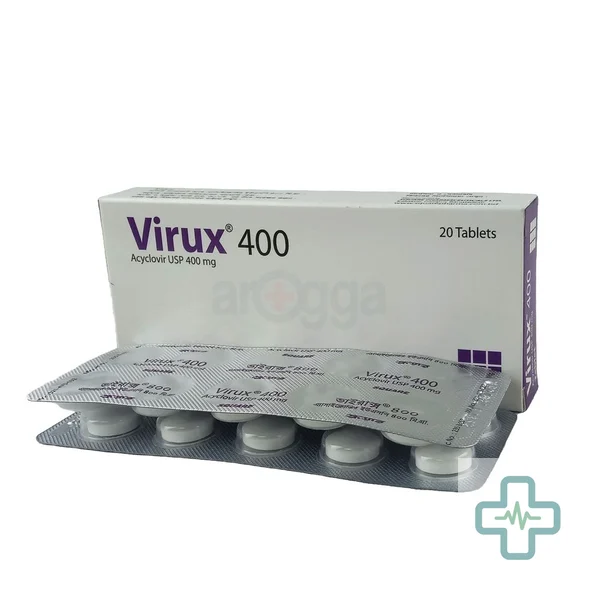
Tablet
Virux 400 mg Tablet
Generic: Acyclovir (Aciclovir)
Manufacturer: Square Pharmaceuticals PLC, Pabna
Therapeutic class: Antiviral (Nucleoside Analogue)
What is Virux used for?
Virux (Tablet) contains Acyclovir (Aciclovir) 400 mg and is made by Square Pharmaceuticals PLC, Pabna. Therapeutic class: Antiviral (Nucleoside Analogue).
Price in Bangladesh
| Pack | Price (BDT) |
|---|---|
| Per tablet | ৳ 22.14 |
| Strip of 10 | ৳ 221.40 |
Prices are indicative — actual retail price may vary by pharmacy.
What is Virux?
Virux 400 mg Tablet contains acyclovir, an antiviral nucleoside analogue made by Square Pharmaceuticals PLC, Pabna. It is used in the management of infections caused by herpes viruses, including herpes simplex and varicella-zoster infections, as advised by a doctor.
Virux 400 mg tablet by Square Pharmaceuticals PLC, Pabna contains Acyclovir (Aciclovir) (aciclovir), an antiviral medicine against the herpes family of viruses. Doctors in Bangladesh prescribe it for cold sores and genital herpes (herpes simplex), chickenpox (varicella) and shingles (herpes zoster). It works best when started as early as possible — ideally within the first 24 to 72 hours of the rash or tingling. It is a prescription medicine.
Inside virus-infected cells, Acyclovir (Aciclovir) is converted into a fake DNA building block. When the virus tries to copy its DNA to multiply, the fake block jams the copying machinery and replication stops. Healthy uninfected cells activate very little of the drug, which is why it is so selective and generally well tolerated.
Indications
Virux is prescribed for infections caused by herpes-group viruses, including:
- Herpes simplex: first episodes and recurrences of genital herpes, cold sores around the lips, and herpes infections of the skin and mouth
- Suppressive therapy to reduce frequent recurrences of genital herpes
- Chickenpox (varicella), especially in adults and teenagers, who get more severe disease
- Shingles (herpes zoster), to speed healing and reduce nerve pain
- Herpes infections in people with weakened immunity, under specialist care
It reduces the severity and duration of attacks but does not remove the virus from the body, so recurrences can still happen later.
Dosage & Administration
ChamberBD shows dosing only from the approved product label, with its source named, and no label is on file for Virux 400 mg Tablet. Use the dose your doctor prescribed and the instructions in the pack leaflet.
Side Effects
Most people tolerate Virux well. Possible side effects include:
- Nausea, vomiting, diarrhoea or abdominal pain
- Headache, dizziness or tiredness
- Mild skin rash or itching; increased sensitivity to sunlight in some people
Rare but important: kidney problems caused by drug crystals — much likelier if you are dehydrated or take high doses, which is why plenty of fluids matter; and neurological effects such as confusion, tremor, hallucinations or unusual drowsiness, mainly in elderly people or those with kidney impairment. Seek medical help for reduced urine output, severe rash, easy bruising, yellowing of the eyes, or any confusion or behaviour change during treatment.
Precautions & Warnings
The golden rules with Virux: start early and complete the full course. The virus multiplies fastest in the first days — treatment begun after 72 hours helps much less. Stopping midway can let blisters rebound; take every scheduled dose until the course ends, even if the rash crusts over sooner.
- Drink plenty of fluids throughout treatment to protect your kidneys
- Tell your doctor about kidney disease or if you are elderly — doses usually need reduction
- Herpes can still spread to others during an outbreak despite treatment: avoid intimate contact until sores heal, and avoid touching the lesions
- If outbreaks return frequently (six or more per year), ask your doctor about daily suppressive therapy instead of repeated short courses
Drug Interactions
Acyclovir (Aciclovir) has fewer drug interactions than most medicines, but a few combinations need care. Tell your doctor about everything you take, especially:
- Probenecid and cimetidine: slow the kidney's removal of aciclovir and raise its blood level
- Kidney-stressing drugs — aminoglycoside antibiotics, NSAID painkillers used heavily, tenofovir, ciclosporin or tacrolimus: combined use increases the risk of kidney injury, particularly if you are dehydrated
- Theophylline (for asthma/COPD): levels may rise, so monitoring may be needed
- Mycophenolate (transplant medicine): both drugs' levels can increase when taken together
Drinking adequate water and avoiding unnecessary painkillers during the course reduces most of these risks.
Contraindications
Do not take Virux if you are allergic to aciclovir or to valaciclovir (a prodrug that converts into aciclovir in the body). True allergy is uncommon but shows as rash, hives, swelling of the face or breathing difficulty after a dose — stop the medicine and seek care if this happens.
Use Virux only with medical supervision and dose adjustment if you have:
- Significant kidney impairment or are on dialysis
- Advanced age with reduced kidney function
- Severe dehydration that cannot be corrected quickly
- A weakened immune system — herpes infections in such patients need specialist-guided, sometimes intravenous, therapy
Always give your doctor a full medicine and illness history before starting.
Pregnancy & Lactation
Pregnancy: Decades of use and large pregnancy registries have shown no increase in birth defects with Acyclovir (Aciclovir), so doctors prescribe it in pregnancy when treatment is genuinely needed — for example, chickenpox in pregnancy, which can be serious and needs urgent medical advice. Never self-medicate while pregnant; the decision belongs with your doctor.
Breastfeeding: Acyclovir (Aciclovir) passes into breast milk in small amounts that are far below treatment doses for infants, and breastfeeding is usually considered compatible with treatment. Mention that you are nursing, watch the baby for unusual sleepiness or feeding changes, and avoid feeding from a breast that has active herpes sores on it until healed.
Storage Conditions
Store as printed on the pack and keep out of the reach of children.
Frequently Asked Questions
How quickly should I start Virux after a shingles or cold-sore outbreak begins?
As fast as possible — ideally within 24 hours of the first tingling, pain or blister, and certainly within 72 hours. The herpes virus multiplies explosively in the first days; Virux blocks that multiplication but cannot undo damage already done. Started early, it shortens the illness, dries blisters sooner and, in shingles, lowers the chance of lingering nerve pain. If you recognise the warning tingle of a recurring cold sore or genital herpes, contact your doctor immediately about starting treatment that same day.