
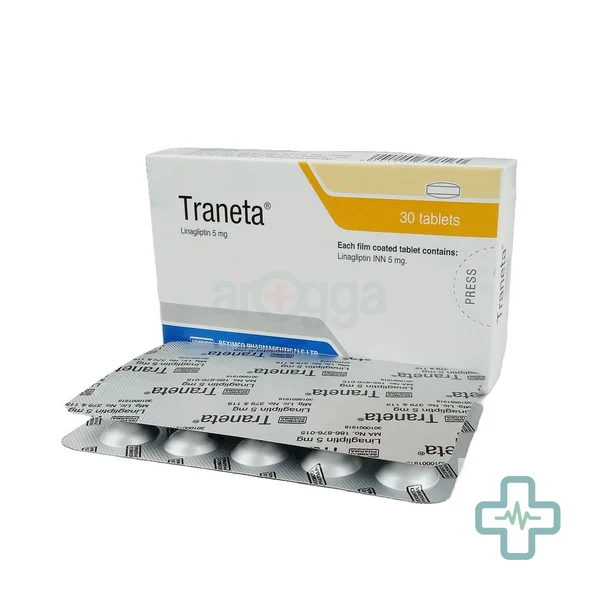
Tablet
Traneta 5 mg Tablet
Generic: Linagliptin
Manufacturer: Beximco Pharmaceuticals Ltd.
Therapeutic class: Dipeptidyl peptidase-4 (DPP-4) inhibitor — oral antidiabetic
What is Traneta used for?
Traneta (Tablet) contains Linagliptin 5 mg and is made by Beximco Pharmaceuticals Ltd. Therapeutic class: Dipeptidyl peptidase-4 (DPP-4) inhibitor — oral antidiabetic.
Price in Bangladesh
| Pack | Price (BDT) |
|---|---|
| Per tablet | ৳ 18.00 |
| Strip of 15 | ৳ 270.00 |
Prices are indicative — actual retail price may vary by pharmacy.
What is Traneta?
Traneta 5 mg Tablet contains linagliptin, an oral DPP-4 inhibitor used in diabetes care. It is prescribed for adults with type 2 diabetes mellitus to help improve blood sugar control alongside diet and exercise.
Traneta 5 mg tablet is produced by Beximco Pharmaceuticals Ltd. and contains Linagliptin, a once-daily diabetes medicine from the DPP-4 inhibitor (gliptin) family. It is prescribed to adults with type 2 diabetes to keep blood sugar within a healthy range, together with diet and exercise.
Linagliptin blocks the DPP-4 enzyme, allowing the body's natural incretin hormones to last longer. These hormones prompt the pancreas to release more insulin after meals and signal the liver to make less sugar. A special feature of linagliptin is that it leaves the body mainly through the bile and gut rather than the kidneys, which is why the dose usually stays the same even in people with kidney disease.
Indications
Traneta is used to improve blood sugar control in adults with type 2 diabetes mellitus, alongside diet and exercise. Your doctor may prescribe it:
- Alone, when metformin is unsuitable — for example due to kidney problems or intolerance
- Together with metformin, a sulfonylurea, pioglitazone, an SGLT2 inhibitor or insulin when combination therapy is needed
Because of the way linagliptin is cleared from the body, it is often favoured for diabetic patients with chronic kidney disease. It is not used for type 1 diabetes or diabetic ketoacidosis. Your doctor will decide its exact place in your treatment plan.
Dosage & Administration
ChamberBD shows dosing only from the approved product label, with its source named, and no label is on file for Traneta 5 mg Tablet. Use the dose your doctor prescribed and the instructions in the pack leaflet.
Side Effects
Traneta is generally well tolerated. Possible side effects include:
- Blocked or runny nose, sore throat, cough
- Headache or dizziness
- Constipation, nausea or mild stomach discomfort
- Joint pain, which is occasionally severe
- Low blood sugar, mainly when combined with a sulfonylurea or insulin
Rare but serious effects include pancreatitis — severe, persistent stomach pain that may radiate to the back, often with vomiting — and a blistering skin condition called bullous pemphigoid, as well as serious allergic reactions with swelling of the face, lips or throat. Stop the medicine and seek medical care urgently if any of these develop.
Precautions & Warnings
Before and during treatment with Traneta:
- Tell your doctor if you have ever had pancreatitis, gallstones or very high triglycerides.
- If you also use insulin or a sulfonylurea, learn the signs of low blood sugar and keep glucose or sweets nearby; those doses may need lowering.
- Report any new severe stomach pain, blistering rash or unusual joint pain promptly.
- Continue routine check-ups — blood sugar, HbA1c and the kidney tests your doctor schedules — even though the linagliptin dose itself rarely changes.
Traneta supplements, but never replaces, a diabetic diet and regular physical activity, and it must not be stopped on your own even when readings look good.
Drug Interactions
Tell your doctor and pharmacist about all your medicines, including herbal and over-the-counter products. Notable interactions with Traneta:
- Rifampicin (a tuberculosis antibiotic) and other strong enzyme inducers such as carbamazepine, phenytoin and St John's wort can markedly reduce the effect of linagliptin — your doctor may choose a different diabetes medicine while these are needed.
- Insulin and sulfonylureas raise the risk of low blood sugar when combined with Traneta; their doses may be reduced.
- Steroids and some diuretics can push blood sugar up, so your control may need re-checking when they are started or stopped.
Contraindications
Do not take Traneta if:
- You are allergic to Linagliptin or any other ingredient of the product
- You previously had a serious reaction — anaphylaxis, angioedema or a severe skin reaction — to linagliptin or another DPP-4 inhibitor
Traneta is not a treatment for type 1 diabetes or diabetic ketoacidosis. If pancreatitis is suspected during treatment, the medicine should be stopped and not restarted without specialist review. When unsure whether Traneta is appropriate for you, always confirm with your doctor or pharmacist before taking it.
Pregnancy & Lactation
There is limited experience with Linagliptin in human pregnancy, so it is best avoided unless your doctor judges it clearly necessary. Pregnant women with diabetes are usually switched to insulin, which has the strongest safety record for the baby. If you become pregnant or plan a pregnancy while taking Traneta, inform your doctor early — do not abruptly stop diabetes treatment, because uncontrolled sugar harms both mother and baby.
It is not known whether linagliptin passes into human breast milk. Discuss with your doctor before breastfeeding; an alternative medicine may be preferred during this period.
Storage Conditions
Store Traneta below 30°C in a cool, dry place, away from direct sunlight and moisture. Keep the tablet in its original blister or container until you take it, and avoid storing medicines in humid places such as the bathroom or kitchen.
- Keep all medicines out of the reach and sight of children.
- Do not use the medicine after the expiry date printed on the pack.
- Do not throw unused medicine into household waste or drains; ask your pharmacist about safe disposal.
Frequently Asked Questions
Can I stop Traneta when I feel better?
No. Good readings and feeling well mean Traneta is doing its job, not that the diabetes has gone. Type 2 diabetes is a lifelong condition; if you stop the medicine yourself, blood sugar usually rises again within days — often silently — and gradually damages the eyes, kidneys, nerves and heart. Whether to reduce, change or stop any diabetes medicine is a decision only your doctor should make, based on your test results.