
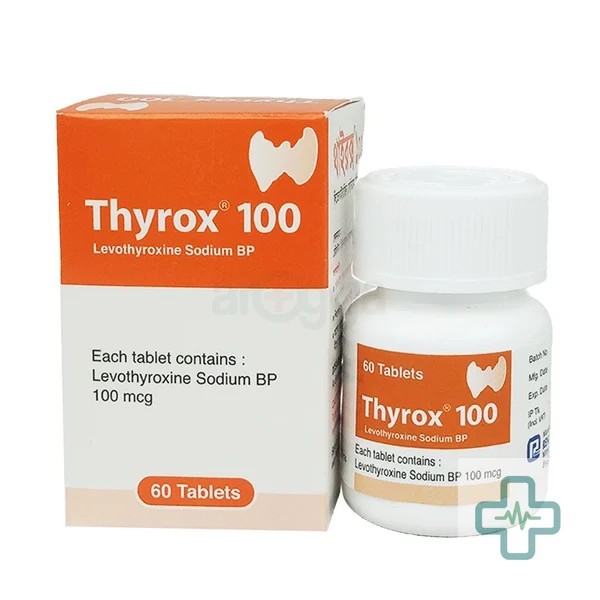
Tablet
Thyrox 100 mcg Tablet
Generic: Levothyroxine Sodium
Manufacturer: Renata PLC
Therapeutic class: Thyroid hormone replacement
What is Thyrox used for?
Thyrox (Tablet) contains Levothyroxine Sodium 100 mcg and is made by Renata PLC. Therapeutic class: Thyroid hormone replacement.
Price in Bangladesh
| Pack | Price (BDT) |
|---|---|
| Per tablet | ৳ 3.10 |
| Box of 60 | ৳ 186.00 |
Prices are indicative — actual retail price may vary by pharmacy.
What is Thyrox?
Thyrox 100 mcg Tablet contains levothyroxine sodium, a synthetic form of the thyroid hormone thyroxine. It is used as thyroid hormone replacement, mainly for people with hypothyroidism when the thyroid gland does not make enough hormone.
Thyrox 100 mcg tablet is manufactured by Renata PLC and contains Levothyroxine Sodium, a man-made version of thyroxine (T4), the main hormone produced by the thyroid gland. It is the standard treatment for hypothyroidism — an underactive thyroid — which is common in Bangladesh, especially among women.
Thyroxine controls the speed of almost every process in the body: energy use, heart rate, body temperature, digestion and growth. When the thyroid cannot make enough, people feel tired, gain weight, feel cold and develop dry skin and constipation. Thyrox simply replaces the missing hormone; the body converts it into the active form (T3) as needed, so with the correct daily dose the body works normally again.
Indications
Thyrox is prescribed for:
- Hypothyroidism from any cause — including Hashimoto's thyroiditis, after thyroid surgery, or after radioactive iodine treatment
- Congenital hypothyroidism in newborns and children, where early treatment protects brain development
- Hypothyroidism during pregnancy, where adequate hormone is essential for the baby
- Certain goitres, and TSH suppression after some thyroid cancers, under specialist care
It is not a tonic, a weight-loss medicine or a treatment for simple tiredness — it should be taken only when blood tests (TSH, with FT4 when needed) confirm the diagnosis and a doctor prescribes it.
Dosage & Administration
ChamberBD shows dosing only from the approved product label, with its source named, and no label is on file for Thyrox 100 mcg Tablet. Use the dose your doctor prescribed and the instructions in the pack leaflet.
Side Effects
At the correct dose, Thyrox simply restores normal hormone levels and causes few side effects; some people notice temporary hair shedding in the first months. Most problems come from a dose that is too high, which mimics an overactive thyroid:
- Palpitations, fast or irregular heartbeat, chest discomfort
- Tremor, anxiety, irritability, difficulty sleeping
- Sweating, heat intolerance, weight loss, diarrhoea
- In women, menstrual irregularities
Long-term over-replacement can thin the bones (osteoporosis) and trigger an irregular heart rhythm (atrial fibrillation), especially in older people. If such symptoms appear, do not stop the medicine abruptly — contact your doctor, who will recheck your TSH and adjust the dose.
Precautions & Warnings
To get the full benefit of Thyrox safely:
- Take it the same way every day — same time, same routine — because absorption habits change blood levels. Where possible, stay on the same brand; if the brand changes, a TSH recheck may be sensible.
- Tell your doctor if you have heart disease, angina, high blood pressure, diabetes or adrenal problems — treatment usually starts low and rises slowly, and adrenal insufficiency must be treated first.
- In diabetes, thyroid correction may change your sugar control, so monitor as advised.
- Tell your doctor if you are pregnant or planning pregnancy — the dose often needs increasing early in pregnancy.
- Stop biotin-containing supplements a few days before thyroid blood tests, as they can distort results — ask your doctor first.
Drug Interactions
Many common products interfere with Thyrox, mostly by blocking its absorption or changing its breakdown:
- Calcium and iron tablets, antacids, sucralfate — keep at least a 4-hour gap.
- Omeprazole-type acid reducers can lower absorption; tell your doctor if you use them regularly.
- Coffee, soy products and very high-fibre meals close to the dose reduce absorption — keep your routine consistent.
- Warfarin — the blood-thinning effect may increase; INR needs closer monitoring.
- Diabetes medicines may need adjusting as thyroid levels normalise.
- Oestrogens (including some contraceptives), rifampicin, carbamazepine and phenytoin can change levothyroxine requirements.
Always show your full medicine list to your doctor and pharmacist.
Contraindications
Do not take Thyrox if:
- You are allergic to Levothyroxine Sodium or any other ingredient
- You have an overactive thyroid (untreated thyrotoxicosis)
- You have untreated adrenal insufficiency — this must be corrected first, otherwise a dangerous adrenal crisis can occur
- You have had a very recent heart attack or unstable angina, unless your doctor specifically advises treatment
Thyrox must never be used for weight loss in people with a normal thyroid — high doses can cause serious, even life-threatening, heart effects. If you are unsure whether the medicine is right for you, confirm with your doctor before starting.
Pregnancy & Lactation
Thyrox is one of the few medicines that is both safe and essential during pregnancy when prescribed for hypothyroidism. The baby depends on the mother's thyroid hormone, especially in the first trimester, for brain development — so the medicine must not be stopped. In fact, the dose usually needs to be increased by around 25–30% in early pregnancy; inform your doctor as soon as pregnancy is confirmed and attend the more frequent TSH checks.
Levothyroxine at correct replacement doses is also considered safe during breastfeeding — only tiny amounts pass into milk. Continue your tablets and routine monitoring while nursing.
Storage Conditions
Levothyroxine is a sensitive medicine — heat, humidity and light can weaken it, which then shows up as poorly controlled thyroid tests. Store Thyrox below 25–30°C in a cool, dry place away from direct sunlight, keeping the tablet in its original blister or tightly closed container until use.
- Do not store it in the bathroom, kitchen or a hot car.
- Keep all medicines out of the reach and sight of children.
- Do not use after the expiry date, and ask your pharmacist about safe disposal of unused tablets.
Frequently Asked Questions
Why must I take Thyrox on an empty stomach 30–60 minutes before breakfast?
Levothyroxine is absorbed in the gut, and food is its biggest enemy — breakfast, milk tea, coffee and especially calcium- or iron-rich items can cut absorption sharply, so the same tablet delivers less hormone. Taking Thyrox with plain water as soon as you wake, then waiting 30–60 minutes before eating or drinking anything else, gives steady, predictable absorption. Consistency matters as much as the rule itself: the same time and the same routine every day keep your TSH stable between check-ups.
Can I take Thyrox together with my calcium or iron tablets?
Not at the same time. Calcium and iron bind levothyroxine in the gut and stop much of it from being absorbed — the thyroid tablet can become almost ineffective. Keep a gap of at least 4 hours: for example, take Thyrox before breakfast and the calcium or iron tablet after lunch or at night. The same rule applies to antacids and multivitamins containing minerals. If your prescriptions change, ask your doctor or pharmacist to help you plan the day's timing.