
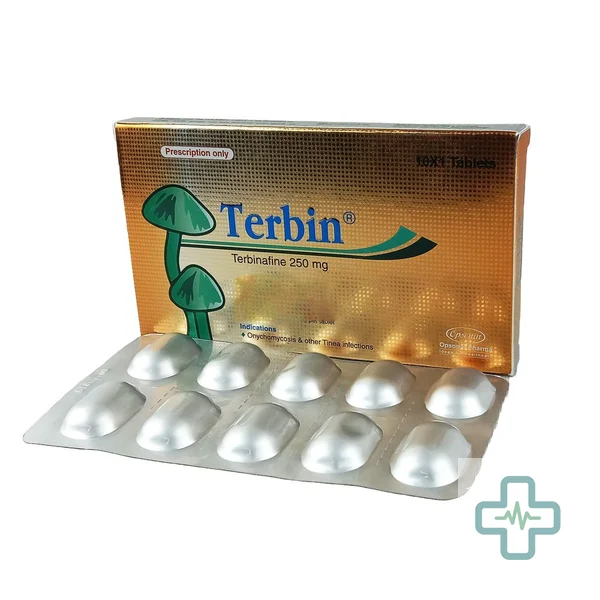
Tablet
Terbin 250 mg Tablet
Generic: Terbinafine
Manufacturer: Opsonin Pharma Limited
Therapeutic class: Allylamine antifungal
What is Terbin used for?
Terbin (Tablet) contains Terbinafine 250 mg and is made by Opsonin Pharma Limited. Therapeutic class: Allylamine antifungal.
Price in Bangladesh
| Pack | Price (BDT) |
|---|---|
| Per tablet | ৳ 60.00 |
| Box of 10 | ৳ 600.00 |
Prices are indicative — actual retail price may vary by pharmacy.
What is Terbin?
Terbin 250 mg Tablet contains terbinafine, an allylamine antifungal medicine made by Opsonin Pharma Limited. It is used to treat certain fungal infections, especially dermatophyte infections of the skin, scalp, or nails when oral treatment is appropriate.
Terbin 250 mg tablet by Opsonin Pharma Limited contains terbinafine, an allylamine antifungal medicine. It is used to treat fungal infections of the skin, scalp and nails, such as ringworm, athlete's foot, jock itch and fungal nail infections.
Terbinafine works by blocking an enzyme (squalene epoxidase) that fungi need to make ergosterol, a vital part of their cell membrane. This causes a toxic substance to build up inside the fungal cell and stops the membrane forming properly, killing the fungus. Because nails and deep skin clear slowly, terbinafine is often taken for several weeks or months.
Indications
Terbinafine is prescribed for fungal infections caused by sensitive fungi, including:
- Fungal nail infections (onychomycosis) of the toenails and fingernails
- Ringworm of the body (tinea corporis) and groin (tinea cruris / jock itch)
- Athlete's foot (tinea pedis)
- Fungal scalp infections (tinea capitis), particularly in children, under specialist care
Tablets are used for more extensive, stubborn or nail and scalp infections. Your doctor decides whether oral terbinafine is right for you.
Dosage & Administration
ChamberBD shows dosing only from the approved product label, with its source named, and no label is on file for Terbin 250 mg Tablet. Use the dose your doctor prescribed and the instructions in the pack leaflet.
Side Effects
Terbinafine is usually well tolerated, but side effects can include:
- Common: stomach upset, nausea, mild abdominal pain, diarrhoea, headache and a temporary loss or change of taste or smell
- Less common: skin rash, itching and joint or muscle aches
- Serious (seek urgent help): yellowing of the skin or eyes, dark urine, pale stools, persistent nausea (possible liver problem); severe skin rash or peeling; or signs of a serious allergic reaction
Loss of taste usually returns after stopping. Report any sign of liver trouble or a severe rash to your doctor at once.
Precautions & Warnings
Terbinafine should be used on a doctor's advice, not as casual self-medication. Do not share it or use leftover tablets for a new problem, and have skin or nail infections properly diagnosed first, as not every rash is fungal.
- Complete the full course — often several weeks to months. Stopping early is a common reason the infection returns, and incomplete or misused antifungals can encourage drug-resistant fungal infections, a growing concern in Bangladesh.
- Liver caution: terbinafine can rarely affect the liver. Tell your doctor about any liver disease; blood tests may be advised, and report yellowing skin, dark urine or persistent nausea.
- Mention any kidney problems, lupus or taste disturbance.
Drug Interactions
Tell your doctor about all your medicines and supplements. Terbinafine can interact with:
- Tricyclic antidepressants, some beta-blockers and antiarrhythmics (drugs broken down by the enzyme CYP2D6) — their levels may rise
- Certain antidepressants (SSRIs) and antipsychotics
- Rifampicin — lowers terbinafine levels; cimetidine — raises them
- Caffeine — its effect may be increased
Check with your doctor or pharmacist before starting any new medicine while taking terbinafine.
Contraindications
Do not take Terbinafine if you:
- Are allergic to terbinafine
- Have active or chronic liver disease
- Have severe kidney impairment (unless a doctor specifically advises it)
Use with caution if you have psoriasis, lupus or a history of liver or kidney problems. Always share your full medical history before starting oral terbinafine.
Pregnancy & Lactation
Oral terbinafine is generally not recommended during pregnancy, because fungal nail and skin infections are not dangerous and treatment can safely wait until after delivery. It should only be considered if a doctor judges it truly necessary.
Terbinafine passes into breast milk, so it is not recommended while breastfeeding. If you are pregnant, planning a pregnancy or breastfeeding, tell your doctor before taking Terbin; usually treatment is simply postponed or a topical option is used.
Storage Conditions
Store Terbin in a cool, dry place below 30°C, away from direct sunlight and moisture.
- Keep tablets in their original blister pack.
- Keep the medicine dry, as the tablets are sensitive to moisture.
- Keep all medicines out of the reach of children.
- Do not use after the expiry date; return unused medicine to a pharmacy for safe disposal.
Frequently Asked Questions
Do I need any tests while taking Terbin?
Possibly. Because terbinafine is taken for weeks to months and can rarely affect the liver, your doctor may check your liver with a blood test before and during treatment, especially for longer courses. Tell your doctor straight away if you notice yellowing of the skin or eyes, dark urine, pale stools, unusual tiredness or persistent nausea and vomiting, as these can be signs of a liver problem. Do not drink heavily while on Terbin, and report any other medicines you take.
I have lost my sense of taste on Terbin — is this permanent?
A change or loss of taste (and sometimes smell) is a known side effect of terbinafine. It is usually not permanent and most often returns gradually within a few weeks after the course finishes, though occasionally it can take longer. If the taste change is severe, is affecting your eating and weight, or does not improve, tell your doctor, who may review whether to continue Terbin. Do not simply stop the tablets on your own without medical advice.