
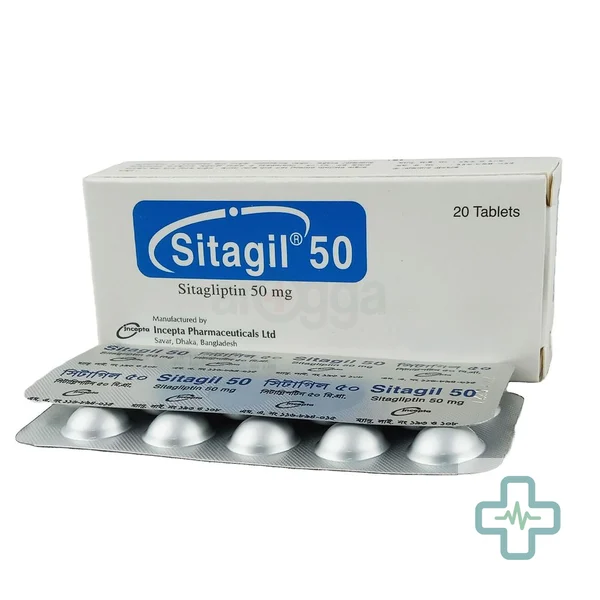
Tablet
Sitagil 50 mg Tablet
Generic: Sitagliptin
Manufacturer: Incepta Pharmaceuticals Ltd.
Therapeutic class: Dipeptidyl peptidase-4 (DPP-4) inhibitor — oral antidiabetic
What is Sitagil used for?
Sitagil (Tablet) contains Sitagliptin 50 mg and is made by Incepta Pharmaceuticals Ltd. Therapeutic class: Dipeptidyl peptidase-4 (DPP-4) inhibitor — oral antidiabetic.
Price in Bangladesh
| Pack | Price (BDT) |
|---|---|
| Per tablet | ৳ 15.00 |
| Strip of 10 | ৳ 150.00 |
Prices are indicative — actual retail price may vary by pharmacy.
What is Sitagil?
Sitagil 50 mg Tablet contains sitagliptin, an oral DPP-4 inhibitor from Incepta Pharmaceuticals Ltd. It is used in adults with type 2 diabetes mellitus to help improve blood sugar control along with appropriate diet and exercise.
Sitagil 50 mg tablet is a prescription diabetes medicine manufactured by Incepta Pharmaceuticals Ltd.. It contains the generic drug Sitagliptin, which belongs to a group of medicines called DPP-4 inhibitors (gliptins). Doctors in Bangladesh commonly prescribe it to help control blood sugar in adults with type 2 diabetes, always alongside a healthy diet and regular physical activity.
Sitagliptin works by blocking an enzyme called DPP-4. This protects the body's natural incretin hormones, which signal the pancreas to release more insulin after meals and tell the liver to make less sugar. Because it acts mainly when blood glucose is high, Sitagil taken on its own rarely causes dangerously low blood sugar.
Indications
Sitagil is used to improve blood sugar control in adults with type 2 diabetes mellitus, together with diet and exercise. Your doctor may prescribe it:
- Alone, when metformin is not suitable or is not tolerated
- In combination with metformin, a sulfonylurea, pioglitazone or insulin, when one medicine is not enough
It is not used for type 1 diabetes or for diabetic ketoacidosis (a dangerous build-up of acids in the blood). The exact role of Sitagil in your treatment plan depends on your blood sugar levels, kidney function and other medicines, so always follow your doctor's advice.
Dosage & Administration
ChamberBD shows dosing only from the approved product label, with its source named, and no label is on file for Sitagil 50 mg Tablet. Use the dose your doctor prescribed and the instructions in the pack leaflet.
Side Effects
Most people tolerate Sitagil well. Possible side effects include:
- Headache, blocked or runny nose, sore throat
- Nausea, stomach upset, diarrhoea or constipation
- Joint or muscle pain
- Low blood sugar (hypoglycaemia), mainly when Sitagil is combined with a sulfonylurea or insulin — watch for sweating, shakiness, hunger and palpitations
Rare but serious problems include inflammation of the pancreas (severe, persistent stomach pain that may spread to the back, with vomiting), serious allergic reactions (swelling of the face, lips or throat; widespread rash) and a blistering skin disease. Stop the medicine and seek medical help immediately if any of these occur.
Precautions & Warnings
Before starting Sitagil, tell your doctor if you have:
- Kidney disease or are on dialysis — the dose may need adjusting
- A history of pancreatitis, gallstones or very high triglycerides
- Heart failure or significant heart disease
Keep up regular blood sugar testing, HbA1c checks and kidney function tests as advised. Learn to recognise and treat low blood sugar if you also use insulin or a sulfonylurea, and keep glucose or sweets handy. Continue your diabetic diet and physical activity — Sitagil works alongside lifestyle changes, not instead of them. Do not stop or change the dose on your own, even if you feel well, because blood sugar can rise silently.
Drug Interactions
Sitagliptin has relatively few drug interactions, but always tell your doctor and pharmacist about every medicine you take, including herbal and over-the-counter products. Important points:
- Insulin and sulfonylureas (e.g. glimepiride, gliclazide): combining them with Sitagil increases the risk of low blood sugar; your doctor may lower their dose.
- Digoxin (a heart medicine): sitagliptin can slightly raise digoxin levels, so monitoring may be advised.
- Steroids, diuretics (water tablets) and some antibiotics can change blood sugar control, so doses may need review.
Do not start any new medicine without informing the doctor who manages your diabetes.
Contraindications
Do not take Sitagil if:
- You are allergic to Sitagliptin or any other ingredient of the product
- You previously had a serious allergic reaction to a DPP-4 inhibitor, such as anaphylaxis or swelling of the face, lips or throat (angioedema)
Sitagil must not be used to treat type 1 diabetes or diabetic ketoacidosis. If you develop severe, ongoing abdominal pain (possible pancreatitis), the medicine should be stopped and you should be assessed by a doctor before it is ever restarted. If you are unsure whether this medicine is safe for you, ask your physician or pharmacist first.
Pregnancy & Lactation
There is not enough reliable information about the safety of Sitagliptin in human pregnancy. For most pregnant women with diabetes, doctors prefer to control blood sugar with insulin, because it has the best-established safety record. If you are pregnant, planning a pregnancy or discover you are pregnant while taking Sitagil, contact your doctor promptly — do not simply stop the medicine, as uncontrolled blood sugar can also harm the baby.
It is not known whether sitagliptin passes into human breast milk. Discuss the risks and benefits with your doctor before breastfeeding while on Sitagil; an alternative treatment may be chosen.
Storage Conditions
Store Sitagil below 30°C in a cool, dry place, away from direct sunlight and moisture. Keep the medicine in its original blister or container until you are ready to take it, because humidity can damage it — avoid storing it in the bathroom or kitchen.
- Keep all medicines out of the reach and sight of children.
- Do not use the medicine after the expiry date printed on the pack.
- Do not throw unused medicine into household waste or drains; ask your pharmacist about safe disposal.
Frequently Asked Questions
Can I stop Sitagil when I feel better?
No. Type 2 diabetes is a long-term condition, and feeling well usually means the medicine is doing its job. If you stop Sitagil on your own, your blood sugar can rise again without obvious symptoms and silently damage your eyes, kidneys, nerves and heart. Only your doctor should decide whether to change, reduce or stop your diabetes medicine, based on your blood tests and overall health.