
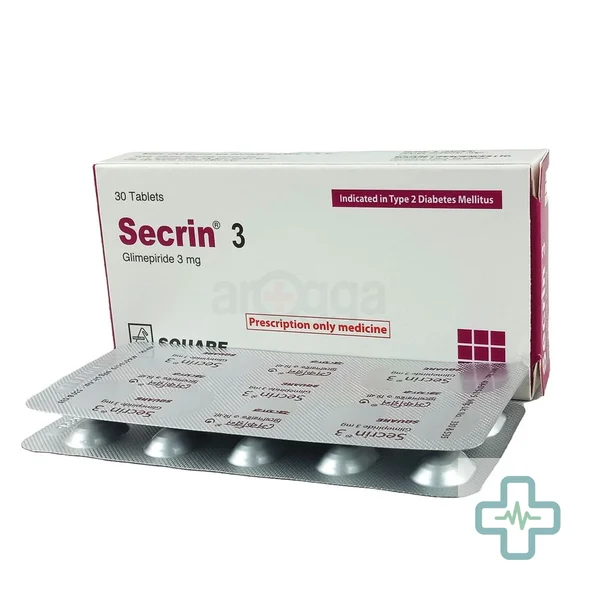
Tablet
Secrin 3 mg Tablet
Generic: Glimepiride
Manufacturer: Square Pharmaceuticals PLC, Pabna
Therapeutic class: Sulfonylurea — oral antidiabetic for type 2 diabetes
What is Secrin used for?
Secrin (Tablet) contains Glimepiride 3 mg and is made by Square Pharmaceuticals PLC, Pabna. Therapeutic class: Sulfonylurea — oral antidiabetic for type 2 diabetes.
Price in Bangladesh
| Pack | Price (BDT) |
|---|---|
| Per tablet | ৳ 12.00 |
| Strip of 10 | ৳ 120.00 |
Prices are indicative — actual retail price may vary by pharmacy.
What is Secrin?
Secrin 3 mg Tablet contains glimepiride, a sulfonylurea oral antidiabetic medicine from Square Pharmaceuticals PLC, Pabna. It is used in adults with type 2 diabetes to help lower blood sugar as part of diabetes care.
Secrin 3 mg tablet is a product of Square Pharmaceuticals PLC, Pabna containing the generic Glimepiride. It belongs to the sulfonylurea group of diabetes tablets and is widely prescribed in Bangladesh for type 2 diabetes, either alone or together with metformin or other antidiabetic medicines, when diet and exercise are not enough to keep blood sugar in range.
Glimepiride works by stimulating the beta cells of the pancreas to release more of your own insulin, and it also helps the body's tissues use that insulin more effectively. Because it actively pushes insulin out, it lowers blood sugar powerfully — but for the same reason it can cause low blood sugar (hypoglycaemia) if you skip meals or take more than prescribed, so regular eating habits matter a lot with this medicine.
Indications
Secrin is prescribed for:
- Type 2 diabetes mellitus — when blood sugar is not controlled by diet, weight control and exercise alone.
- Combination therapy — alongside metformin, DPP-4 inhibitors, SGLT2 inhibitors or insulin when one medicine is not enough, as decided by the doctor.
It is not suitable for type 1 diabetes or for diabetic ketoacidosis, because in those situations the pancreas cannot supply insulin and injection insulin is essential. The doctor chooses glimepiride considering your age, kidney and liver function, eating pattern and risk of low blood sugar.
Dosage & Administration
ChamberBD shows dosing only from the approved product label, with its source named, and no label is on file for Secrin 3 mg Tablet. Use the dose your doctor prescribed and the instructions in the pack leaflet.
Side Effects
Possible side effects of Secrin include:
- Hypoglycaemia (low blood sugar) — the most important one: sweating, trembling, sudden hunger, palpitations, dizziness, blurred vision, confusion; severe cases can cause fainting or fits. Treat immediately with sugar, glucose or sweets, then eat a meal.
- Weight gain — modest, due to increased insulin.
- Stomach upset — nausea, fullness or mild abdominal pain, usually temporary.
- Skin reactions — rash or itching in some people.
- Rarely, blood-cell changes or liver enzyme rise — your doctor may order occasional blood tests.
Report repeated hypoglycaemia episodes to your doctor; the dose may need lowering.
Precautions & Warnings
While on Secrin:
- Eat meals on time and never skip them; carry glucose, sugar or sweets with you, especially when travelling or fasting is likely.
- Learn the warning signs of low blood sugar and teach family members what to do.
- Be extra careful with driving or operating machinery until you know how the medicine affects you — hypoglycaemia impairs concentration.
- Elderly patients and those with kidney or liver disease are more prone to prolonged hypoglycaemia; doses are kept lower.
- Alcohol can both mask and worsen low blood sugar — best avoided.
- During Ramadan or any fasting, consult your doctor beforehand; the dose timing usually needs changing.
- Continue regular blood sugar and HbA1c checks.
Drug Interactions
Many medicines interact with Secrin; always show your doctor your full medicine list:
- Drugs that increase hypoglycaemia risk — other antidiabetics, insulin, aspirin and NSAIDs, some antibiotics (e.g. fluoroquinolones, sulfonamides/co-trimoxazole), fluconazole and certain antidepressants.
- Drugs that raise blood sugar and weaken control — steroids, thiazide diuretics, some hormone preparations.
- Beta-blockers — can hide the warning signs of low blood sugar (tremor, palpitations).
- Warfarin — effects of either drug may change; monitoring is needed.
- Alcohol — unpredictable rise or fall of sugar; avoid.
Contraindications
Do not take Secrin if you have:
- Type 1 diabetes or diabetic ketoacidosis (with or without coma) — insulin is mandatory in these conditions.
- Severe kidney or liver failure — risk of prolonged, dangerous hypoglycaemia; insulin is usually preferred.
- Allergy to glimepiride, other sulfonylureas or sulfonamide drugs.
- Pregnancy and breastfeeding — glimepiride is generally avoided; insulin is the standard alternative.
Pregnancy & Lactation
Pregnancy: Secrin is not recommended during pregnancy. If you are planning pregnancy or discover you are pregnant, contact your doctor promptly — treatment is usually switched to insulin, which controls sugar safely for the baby. Uncontrolled diabetes in pregnancy harms both mother and child, so never simply stop the medicine without arranging a replacement plan with your doctor.
Breastfeeding: Sulfonylureas may pass into breast milk and could lower the baby's blood sugar, so glimepiride is generally avoided while breastfeeding. Your doctor will advise insulin or another suitable option during this period.
Storage Conditions
Keep Secrin below 30°C in a dry place, protected from light and moisture. Leave the tablets in their original blister strip until use, and keep all medicines locked away from children. Do not use beyond the expiry date on the pack, and dispose of expired tablets through a pharmacy instead of household rubbish.