
Tablet
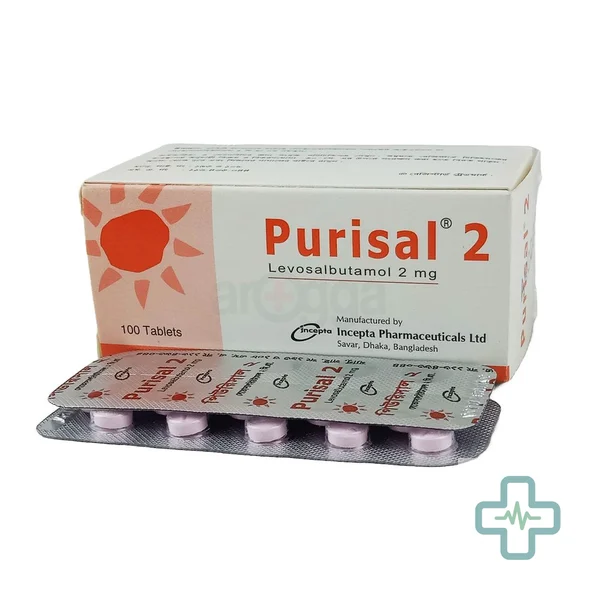
Purisal 2 2 mg Tablet
Generic: Levosalbutamol
Manufacturer: Incepta Pharmaceuticals Ltd. (Dhamrai Unit)
Therapeutic class: Short-acting beta-2 agonist (reliever bronchodilator)
What is Purisal 2 used for?
Purisal 2 (Tablet) contains Levosalbutamol 2 mg and is made by Incepta Pharmaceuticals Ltd. (Dhamrai Unit). Therapeutic class: Short-acting beta-2 agonist (reliever bronchodilator).
Price in Bangladesh
| Pack | Price (BDT) |
|---|---|
| Per tablet | ৳ 2.00 |
| Strip of 10 | ৳ 20.00 |
Prices are indicative — actual retail price may vary by pharmacy.
What is Purisal 2?
Purisal 2 is a tablet containing 2 mg levosalbutamol, a short-acting beta-2 agonist bronchodilator. It is used as a reliever medicine to help open narrowed airways during bronchospasm in conditions such as asthma or chronic obstructive pulmonary disease.
Purisal 2 2 mg tablet from Incepta Pharmaceuticals Ltd. (Dhamrai Unit) contains Levosalbutamol, a reliever bronchodilator. It is used to quickly open up narrowed airways in asthma, wheezing and chronic obstructive pulmonary disease (COPD), relieving breathlessness, chest tightness and cough. Levosalbutamol is the active (R)-form of salbutamol, designed to give effective bronchodilation with comparatively fewer side effects such as shakiness.
In asthma and similar conditions, the muscles around the breathing tubes tighten and squeeze the airways. Levosalbutamol stimulates beta-2 receptors on these muscles, making them relax so the airways widen and air can flow easily again. Its effect starts quickly, which is why Purisal 2 is used to relieve symptoms — but frequent need for a reliever means the underlying disease needs better control by a doctor.
Indications
Purisal 2 is used for:
- Bronchial asthma — relief of wheeze, breathlessness, chest tightness and cough
- Chronic obstructive pulmonary disease (COPD) — relief of reversible airway narrowing
- Wheezing in respiratory infections — when the doctor finds bronchospasm
- Exercise-induced bronchospasm — prevention before exertion, as advised
It relieves symptoms but does not cure the underlying disease; long-term asthma control often needs preventer (inhaled steroid) therapy decided by a doctor.
Dosage & Administration
ChamberBD shows dosing only from the approved product label, with its source named, and no label is on file for Purisal 2 2 mg Tablet. Use the dose your doctor prescribed and the instructions in the pack leaflet.
Side Effects
Possible side effects of Purisal 2 include:
- Tremor — fine shaking of the hands, the most common effect
- Palpitations — awareness of a fast or pounding heartbeat
- Headache, nervousness or restlessness
- Muscle cramps
- Dizziness, sleep disturbance (less common)
- With high or frequent doses: low blood potassium, significant heart racing
Tremor and palpitation often lessen as the body adjusts. If you have chest pain, severe palpitations or worsening breathlessness after use, seek medical help immediately.
Precautions & Warnings
- Do not overuse. Needing Purisal 2 more and more often is a warning sign of poorly controlled asthma — see your doctor for a preventer plan instead of taking extra doses.
- Tell your doctor if you have heart disease, high blood pressure, irregular heartbeat, overactive thyroid or diabetes — extra caution is needed.
- High doses can lower blood potassium; this matters if you also take diuretics, steroids or theophylline.
- If breathing worsens immediately after a dose (paradoxical bronchospasm), stop and seek urgent care.
- Use inhaler devices with correct technique; ask your doctor or pharmacist to check it.
- Keep regular follow-up so your asthma treatment can be stepped up or down properly.
Drug Interactions
Tell your doctor about all your medicines. Notable interactions of Levosalbutamol:
- Beta-blockers (e.g., propranolol) — oppose its action and can trigger bronchospasm in asthma; usually avoided together.
- Diuretics and corticosteroids — combined use can lower blood potassium further.
- Theophylline/doxophylline — additive stimulant effects and potassium lowering; monitoring may be needed.
- Digoxin — levels and rhythm effects may change.
- MAO inhibitors and tricyclic antidepressants — may exaggerate cardiovascular effects.
- Other inhaled or oral beta-agonists — avoid duplication without medical advice.
Contraindications
- Known hypersensitivity to Levosalbutamol, salbutamol or any component of the preparation
- Use with great caution — only under medical supervision — in severe heart disease, serious rhythm disorders, uncontrolled hyperthyroidism
- Not for self-treatment of severe acute asthma attacks that do not respond — such attacks need emergency hospital care
Pregnancy & Lactation
In pregnancy, Levosalbutamol is used when needed because uncontrolled asthma itself is risky for both mother and baby — but only at doses set by a doctor. Inhaled forms expose the baby to less medicine than tablets. Small amounts may pass into breast milk; breastfeeding mothers should use Purisal 2 only on medical advice. Never stop your asthma medicine in pregnancy without consulting your doctor.
Storage Conditions
Store as printed on the pack and keep out of the reach of children.